

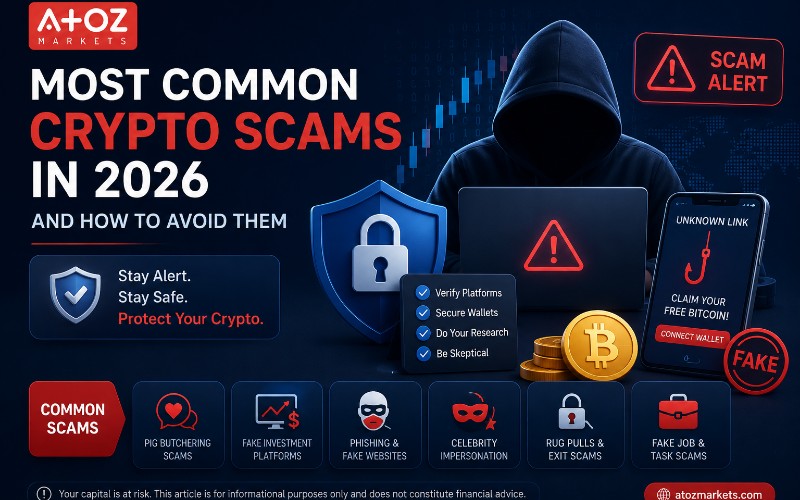
Cryptocurrency scams cost victims over $5.6 billion in 2023 alone, according to FBI data—and the tactics have only grown more sophisticated since. From AI-generated deepfakes of celebrities promoting fake giveaways to months-long “pig butchering” schemes that blend romance with investment fraud, scammers are exploiting every angle of the crypto ecosystem.
This guide breaks down the most common crypto scam types active in 2026, the red flags that reveal them, and the practical steps that help protect your assets.
Your capital is at risk. This article is for informational purposes only and does not constitute financial advice.
What is a crypto scam
Crypto scams in 2026 most commonly take the form of “pig butchering” schemes, AI-driven phishing attacks, fake trading apps, and rug pulls. Each of these tactics relies on high-yield promises, fabricated celebrity endorsements, or emotional manipulation to separate people from their digital assets.
A crypto scam, at its core, is any fraudulent scheme designed to steal cryptocurrency. Scammers favor crypto because blockchain transactions are irreversible—once you send funds, there’s no bank to call and no chargeback to request. The money is simply gone.
According to the FTC, “a so-called ‘investment manager’ contacts you out of the blue. They promise to grow your money—but only if you buy cryptocurrency.” This pattern repeats across nearly every scam type, whether the approach comes through a dating app, a fake job listing, or a too-good-to-be-true investment opportunity.
Why cryptocurrency scams differ from traditional fraud
Traditional financial fraud often allows for recovery. Credit card companies reverse unauthorized charges, banks freeze suspicious accounts, and regulatory bodies intervene on behalf of consumers. Cryptocurrency operates differently.
- Irreversibility: Once a blockchain transaction confirms, it cannot be undone by any party.
- Pseudonymity: Scammers hide behind anonymous wallet addresses with no real-world identity attached.
- Decentralization: No central authority exists to freeze funds or reverse transfers.
- Global reach: Fraudsters operate across international borders, making law enforcement coordination difficult.
Because of these characteristics, prevention matters far more than recovery. Recognizing a scam before sending funds is often the only protection available.
Common types of cryptocurrency scams
The following crypto scam types appear most frequently in 2026. Each section explains how the scheme works and what warning signs to watch for.
Pig butchering scams
Pig butchering is a long-term fraud where scammers invest weeks or months building trust with victims, typically through dating apps or social media. The name comes from the practice of “fattening” a target with attention and affection before the financial slaughter.
After establishing a relationship, the scammer introduces a “guaranteed” investment opportunity and directs the victim to a fake trading platform. Victims often see fabricated profits on their dashboard, encouraging them to deposit more. When they try to withdraw, the platform demands fees, taxes, or additional deposits—and eventually disappears entirely.
Red flag: An online contact who quickly shifts conversations from romance to investment advice.
Fake investment platforms and high-yield schemes
Fraudulent exchanges and investment groups promise guaranteed returns with zero risk. These platforms often look professional, complete with customer support chat and mobile apps, but exist solely to collect deposits.
Some operate through private Telegram or WhatsApp groups where “successful traders” share screenshots of their profits. The screenshots are fabricated, and the group exists to funnel victims toward the fake platform.
Red flag: Any promise of guaranteed profits or risk-free returns.
Impersonation and celebrity giveaway scams
Scammers impersonate public figures like Elon Musk, often using AI-generated deepfake videos, to promote fake cryptocurrency giveaways. The typical pitch asks victims to send a small amount of crypto to “verify” their wallet, promising a larger amount in return.
The return never arrives. These scams spread rapidly through social media, YouTube ads, and hacked accounts of legitimate influencers.
Red flag: Any celebrity or public figure asking you to send cryptocurrency.
Phishing scams and fake crypto websites
Phishing attacks use fake emails, spoofed login pages, and fraudulent websites to steal credentials and seed phrases. A seed phrase is the 12 or 24-word recovery code that grants complete access to a cryptocurrency wallet.
Phishing sites often use URLs nearly identical to legitimate platforms, with subtle misspellings like “coinbase-secure.com” instead of “coinbase.com.” Once a victim enters their credentials, scammers drain the wallet within minutes.
Red flag: URLs that don’t exactly match the official domain of the service.
Romance scams
Romance scams share similarities with pig butchering but typically operate on shorter timelines. A scammer feigns romantic interest, builds an emotional connection, then fabricates an emergency requiring financial help—often requesting cryptocurrency specifically.
The emotional manipulation makes victims particularly vulnerable, and many send multiple payments before recognizing the pattern.
Red flag: An online romantic partner you’ve never met in person requests money or crypto.
Rug pulls and exit scams
A rug pull occurs when developers of a new cryptocurrency project attract investors, drive up the token price through hype, then suddenly drain the liquidity pool and disappear. Liquidity pools are reserves of funds that allow trading on decentralized exchanges.
Rug pulls are especially common with unaudited DeFi (decentralized finance) projects and newly launched altcoins. Victims are left holding tokens they cannot sell because no liquidity remains.
Red flag: Anonymous development teams, no security audit, and unverifiable claims about locked liquidity.
Employment and task scams
Fake remote job offers require upfront cryptocurrency payments to “start” or involve completing simple tasks with escalating fee requirements. Victims are told they’ve earned commissions but cannot withdraw without paying additional fees.
The FBI has noted that these scams often target job seekers through legitimate-looking listings on employment websites.
Red flag: Any job requiring you to pay your own money to begin working or receive payment.
Fake crypto apps and wallets
Counterfeit mobile applications mimic legitimate wallets and exchanges. Distributed through direct download links rather than official app stores, these apps steal funds or private keys the moment a victim makes a deposit or enters their credentials.
Red flag: Apps unavailable on Google Play or Apple’s App Store, or apps requiring direct APK downloads.
Ponzi and pyramid schemes
Crypto Ponzi schemes pay returns to early investors using capital from new participants rather than legitimate profits. The structure works until recruitment slows, at which point the scheme collapses and later investors lose everything.
Pyramid schemes focus specifically on rewarding participants for recruiting new members, with little or no actual product or service involved.
Red flag: Reward structures heavily based on recruiting others, with unclear or nonexistent revenue models.
Liquidity mining and yield farming fraud
Liquidity mining involves providing cryptocurrency to a decentralized protocol in exchange for rewards. In fraudulent versions, victims connect their wallets to malicious websites and unknowingly authorize smart contracts that grant scammers permission to drain their funds.
A smart contract is self-executing code on a blockchain. Once a victim signs a malicious contract, the scammer can transfer all assets from the connected wallet.
Red flag: Connecting your wallet to unverified protocols promising unusually high returns.
Mining scams
Fake cloud mining contracts promise passive income from cryptocurrency mining operations that don’t exist. Victims pay for hardware, computing power, or mining contracts and receive nothing in return.
Red flag: Guaranteed mining returns without verifiable proof of physical mining operations.
Advance fee scams
Advance fee schemes demand upfront payment of “taxes,” “customs fees,” or “processing charges” before victims can access supposed winnings, inheritances, or withdrawals from fraudulent platforms.
Red flag: Being asked to pay fees to access your own money or receive a prize.
Tech support scams
Scammers impersonate customer support staff from legitimate exchanges or wallet providers. They contact victims claiming there’s a problem with their account and request remote computer access or directly ask for seed phrases to “fix” the issue.
Red flag: Support staff asking for private keys or seed phrases. Legitimate services never request this information.
How to spot a bitcoin scammer
Recognizing warning signs before sending funds is the most effective protection. The following patterns appear across nearly all crypto scams:
- Unsolicited contact: Investment advice or opportunities arriving via DMs, texts, or social media from strangers.
- Pressure tactics: Urgency suggesting you’ll miss a “once-in-a-lifetime” opportunity if you don’t act immediately.
- Guaranteed returns: No legitimate investment can promise risk-free profits.
- Requests for private keys: No legitimate entity ever needs your seed phrase or private keys.
- Unverifiable identities: Anonymous teams, stock photos, or fake-looking social media profiles.
- Payment demands: Fees required to unlock funds, receive prizes, or start employment.
| Legitimate Platform Signs | Crypto Scam Red Flags |
|---|---|
| Registered with financial regulators | No company registration information |
| Transparent team with verifiable history | Anonymous or fake team members |
| Clear fee structures | Hidden fees or withdrawal blocks |
| Official app store listings | Sideloaded apps or direct APK downloads |
| No guaranteed return promises | “Risk-free” or “guaranteed” profits |
How to avoid crypto scams and protect your investments
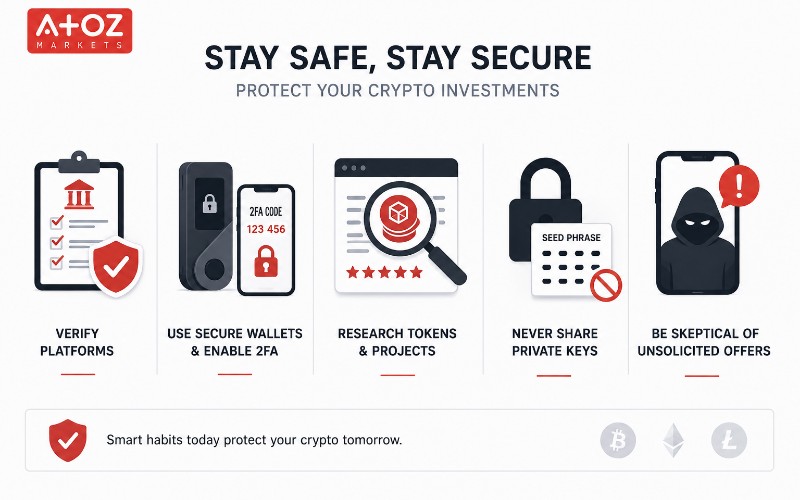
Prevention comes down to consistent habits rather than one-time actions.
Verify platforms before you invest
Check whether a platform is registered with financial regulators in your jurisdiction. Read independent reviews from multiple sources, and confirm the platform isn’t listed on public scam trackers like California’s DFPI Crypto Scam Tracker.
Use secure wallets and enable two-factor authentication
Hardware wallets, also called cold storage, keep cryptocurrency offline and protected from online threats. Two-factor authentication (2FA) adds a second verification step when logging into exchange accounts, making unauthorized access more difficult.
Research tokens and projects thoroughly
Look for independent security audits of a project’s code, verify team member identities through LinkedIn or other professional networks, and review tokenomics for transparency. Community sentiment on platforms like Reddit or Twitter can reveal concerns that promotional materials won’t mention.
Never share private keys or seed phrases
A seed phrase grants complete access to a cryptocurrency wallet. No legitimate service, support agent, or administrator will ever request this information. Treat it like a bank vault combination.
Be skeptical of unsolicited offers
Investment advice from strangers via social media or direct messages warrants immediate skepticism. Celebrity endorsements can be faked with AI or represent paid promotions without proper due diligence.
Tip: Before connecting your wallet to any new platform, search the project name plus “scam” or “review” to surface potential warnings from other users.
What to do if you have been scammed
Acting quickly may limit damage and help authorities track perpetrators.
1. Document everything immediately
Screenshot all communications with the scammer. Record wallet addresses—both yours and the scammer’s. Save transaction IDs from blockchain explorers and document the URLs of any fraudulent websites. This evidence is critical for reporting and any potential recovery efforts.
2. Report to relevant authorities
File reports with the FBI’s Internet Crime Complaint Center (IC3) and the FTC at ReportFraud.ftc.gov. Contact your state’s financial regulators and file a report with local law enforcement to create an official record.
3. Contact your exchange or wallet provider
Report the scammer’s wallet address to your exchange’s support team. Some exchanges can flag or freeze accounts associated with illicit activity, potentially preventing the scammer from converting stolen crypto to cash.
4. Warn others in the community
Share your experience on forums like Reddit and submit scammer wallet addresses to public databases like Chainabuse. Helping others recognize the same scam creates collective protection.
Where to report cryptocurrency scams
- FBI IC3: The primary US federal reporting channel for cybercrime at ic3.gov
- FTC ReportFraud.ftc.gov: Consumer complaints related to investment fraud
- State regulators: Agencies like California’s DFPI maintain public scam trackers
- Exchange support: Report scam addresses directly to platforms like Coinbase, Binance, or Kraken
- Blockchain analysis firms: Companies like Chainalysis accept public tips for investigation
Stay informed and trade safely with AtoZ Markets
Scammer tactics evolve alongside the cryptocurrency market. Following trusted news sources helps traders recognize emerging threats before becoming victims. AtoZ Markets’ Cryptocurrency News section covers market developments, regulatory changes, and security alerts to support informed decision-making.
FAQs about crypto scams
Can you recover money lost to a cryptocurrency scam?
Recovery is extremely difficult because blockchain transactions are irreversible. However, reporting to authorities like the FBI’s IC3 remains important. If stolen funds are traced to a regulated exchange, they can sometimes be frozen before scammers convert them to cash.
Is cryptocurrency itself a scam or a legitimate investment?
Cryptocurrency is a legitimate asset class used by millions of people globally. The technology itself isn’t fraudulent, but the industry’s complexity and limited regulation attract scammers. Thorough research before investing remains essential.
What are some of the biggest crypto scams in history?
Notable examples include OneCoin, a multi-billion dollar Ponzi scheme; BitConnect, a high-yield investment fraud; and the FTX collapse, which involved allegations of massive fraud resulting in billions in investor losses.
How are scammers using artificial intelligence in crypto fraud?
AI now creates convincing deepfake videos of celebrities endorsing fraudulent projects. Scammers also use AI to generate personalized phishing messages at scale and automate social engineering attacks across multiple targets simultaneously.
How can you check if a crypto wallet address is linked to scams?
Blockchain explorers like Etherscan allow you to view an address’s complete transaction history. You can also search wallet addresses on public databases like Chainabuse or the DFPI Crypto Scam Tracker to check for previous fraud reports.