

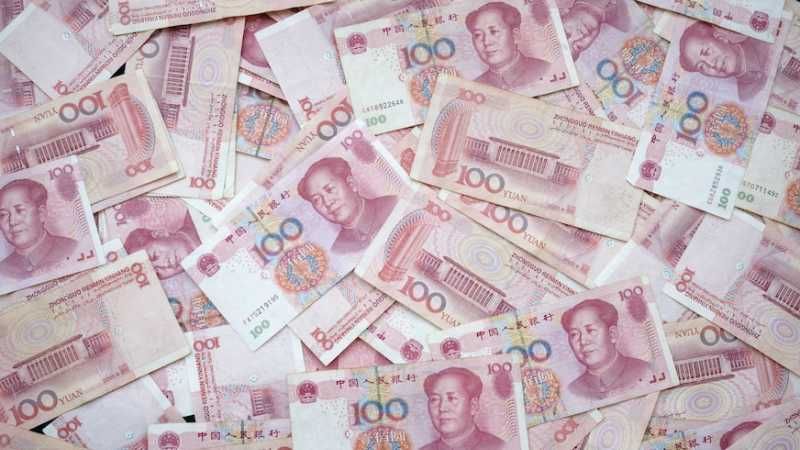
The yuan has replaced the U.S. dollar as the most used currency for cross-border transactions in China, according to official data.
China’s State Administration of Foreign Exchange reported that cross-border payments and receipts in the country’s domestic currency increased to $549.9 billion in March from $434.5 billion the month before.
The yuan’s share in total cross-border transactions, which cover current and capital accounts, rose to 48.4 percent. At the same time, the dollar’s share declined to 46.7 percent from 48.6 percent in February.
Xi Jinping’s administration has been encouraging individuals and businesses to use the yuan for cross-border transactions in the past year to internationalize the currency. The Chinese government reasons that increased reliance on the yuan will reduce the risks of currency mismatch, a condition where shifting exchange rates can influence the current discounted value of expenditure flows and future income.
In addition to its own country, the yuan has extended its dominance in Russia, surpassing the U.S. dollar as the most traded currency by monthly trading volume in February. Russia is trying to reduce its reliance on the dollar after a series of sanctions by the West to weaken the country’s financial system after it invaded Ukraine.
So far, however, the yuan’s global dominance remains abysmal compared to the dollar. International payment processor SWIFT reported that despite rising in March, the yuan’s share in global transactions was at 4.5 percent, significantly lower than the dollar’s 83.71 percent share. The U.S. dollar accounted for 58.36 percent of global forex reserves in the last quarter of 2022, while the yuan held a 2.7 percent share in the same period.
China is not the only country that tries to promote its domestic currency in the global market. The Association of Southeast Asian Nations (ASEAN) member countries, for example, have agreed to use their local currencies for regional trade and reduce reliance on Western currencies.
According to analysts, the de-dollarization trend offers various benefits to the global economy. Former Brazil’s ambassador to China Marcos Caramuru said using domestic currencies in trade enabled importers and exporters to balance risks and enhanced certainty in their revenues.
ToscaFund Hong Kong chief investment officer Mark Tinker said countries that were less reliant on the U.S. dollar would “move up the value chain.” It is especially important for emerging markets, like some Asian countries, because the increased use of their local currencies in the global market aligns with their growth trajectory.
Yuan to not overtake dollar
Although some have raised concerns that the U.S. dollar will lose its global dominance, financial experts say the yuan will not overtake the greenback.
“If the dollar loses its status, it will be because the United States is no longer respected and strong in the world.”
Larry Summers, Former Secretary of the U.S. Treasury
Former Treasury Secretary Larry Summers said the unpredictability and unreliability of the Chinese market would deter other nations from using the yuan. According to economists, Beijing’s capital controls limited the yuan’s liquidity, making it less valuable to more liquid fiats like the U.S. dollar. China has been enforcing capital controls, limiting capital and currency outflows, to ensure domestic firms and households reinvest their money at home.
City University of New York professor Paul Krugman said the U.S.’s open financial markets and robust legal system offered leverage to the dollar. The greenback’s incumbency in global financial markets, including commodities, also provides more protection to the U.S. currency.
Summers, however, pointed out that the U.S. debt ceiling crisis could threaten the dollar’s value. Analysts said the U.S. could default on its debt in the coming months if policymakers did not raise the national debt limit soon.