

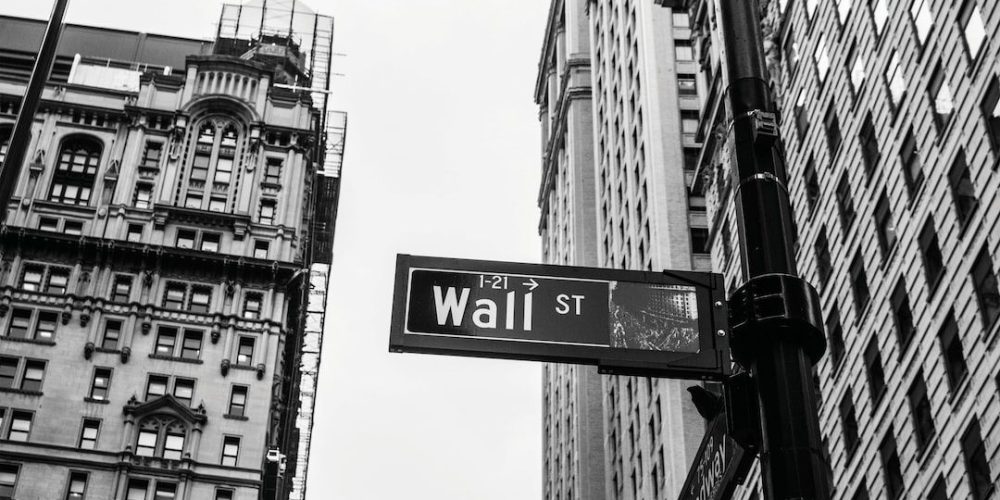
All major stock Wall Street indexes posted their steepest drops in a month on Tuesday as recent reports increased concerns over a slowing U.S. economy.
The blue-chip Dow Jones closed at 33,530.83, losing 344.57 points or 1.02 percent. The S&P 500, which tracks the stock performance of top U.S. companies, finished at 4,071.63, declining by 65.41 points or 1.58 percent. The tech-heavy Nasdaq Composite concluded the session at 11,799.16, tumbling by 238.05 points or 1.98 percent.
Shares of the United Parcel Service (UPS) plummeted by ten percent — its largest daily loss in over a decade — after the logistics giant revised its full-year revenue forecast to the lower end of its previous target. The decline of UPS stock caused a 3.6 percent decline in the Dow Jones Transport Average index.
Microsoft also closed 2.2 percent lower in the regular trading session, the biggest drag in the S&P 500 ahead of its quarterly earnings report. The shares rebounded in late trading after its revenue beat earlier estimates.
Similar to Microsoft, Alphabet finished two percent lower during the day. However, it later posted a four percent increase in after-hours trading after it beat Q1 revenue estimates and announced a $70 billion buyback of its shares.
General Motors tumbled by four percent after the automaker cautioned that price gains from 2022 would not last throughout the year, even as the company increased its full-year profit and cash flow projections.
Medical tech firm Danaher was down 8.8 percent after slashing its annual sales growth forecast. On the other hand, PepsiCo shares gained 2.2 percent after the beverage company raised its annual profit forecast.
Analysts said investors were still “trying to figure out” the soundness of regional lenders in the U.S. The KBW Regional Banking index fell by 3.9 percent as shares of regional lender First Republic declined by 49 percent. The Californian bank reported that its clients withdrew over $100 billion in deposits throughout the first three months of 2023.
“People are trying to figure out the health of the regional banks in general. Is there a canary in the coal mine? It’s really important for mid-size businesses in the country that the regional banks stay healthy.”
Carol Schleif, Chief Investment Officer at BMO Family Office
BMO Family Office chief investment officer Carol Schleif said the health of regional banks was important for mid-size businesses in the U.S. If more regional lenders across the U.S. encounter a liquidity issue, these businesses will have difficulty obtaining loans to continue their operations. The situation may lead to declining productivity across various industries and a spike in unemployment.
Analysts said investors were also concerned about policymakers’ divisive opinions over raising the U.S. debt ceiling. They explained that if the U.S. did not quickly take action, the country could default on its debt as soon as this summer.
“Anytime you hear about a potential default that would trigger a risk-off environment,” Brian Price, head of investment management at independent brokerage firm Commonwealth Financial Network, said. “If we go to the brink and even beyond that wouldn’t bode well for risk assets or consumer confidence.”
Investors anticipating central bank’s policy meeting
Schleif said the market was “trying valiantly to hold it together” ahead of the Federal Reserve’s policy meeting next week. Futures tied to the central bank’s policy show a significant probability that it will increase the benchmark interest rate by 25 basis points to the range of 5.00 to 5.25 percent. Investors also predict that the Fed will start cutting interest rates later than the earlier prediction of September.
Several Fed officials, including Fed governor Christopher Waller, have argued in favor of further interest rate hikes. Waller said core price growth remained at the same rate as it was at the end of 2021 despite the consecutive rate hikes by the central bank.