

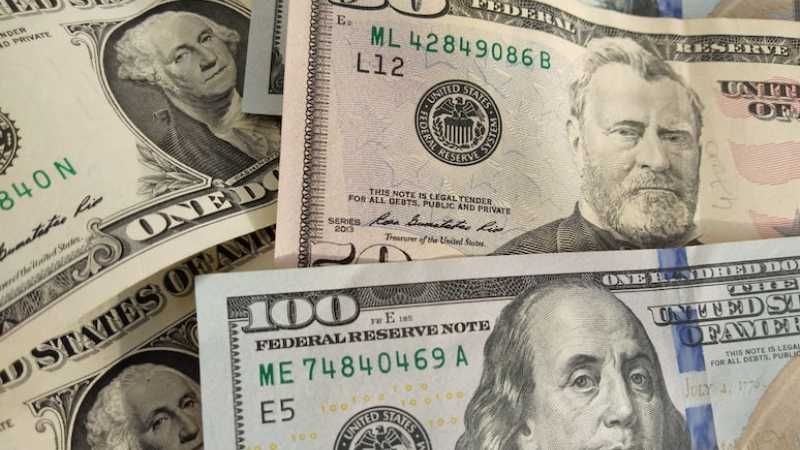
The greenback rose to its highest level in almost two weeks on Monday after new data showed that the U.S. manufacturing sector slightly improved in April after hitting a three-year low the month before.
The dollar index, which keeps tabs on the currency’s performance against major peers, gained 0.41 percent to 102.13. It gained over the euro, which fell by 0.43 percent to $1.0970. The eurozone currency hit a one-year high of $1.1096 last week and posted around one percent monthly gain over the dollar in April.
Meanwhile, the yen maintained its downward trend against the dollar after the Bank of Japan pledged to keep its dovish monetary policy for the meantime. The greenback rose by 0.84 percent to 137.46 yen, the highest since early March.
In the same session, the Australian dollar gained 0.20 percent to $0.6630. The Aussie previously hit a seven-week low of $0.6573 on Friday. The Reserve Bank of Australia (RBA) recently decided to increase its benchmark lending rate by 25 basis points despite an earlier prediction that it would extend its rate hike pause.
RBA governor Philip Lowe said the bank needed to conduct further monetary tightening to bring down inflation to its target rate “within a reasonable timeframe.”
The Institute for Supply Management reported Monday that the manufacturing purchasing managers’ index climbed to 47.1 last month. The index, which shows the current economic trends in the manufacturing and services sectors, previously posted 46.3 in March, which was its lowest level since May 2020.
“Broadly, the data show that the manufacturing sector is still in a recession, but there are some encouraging signs of stabilization in the details.”
Thomas Simons, Money Market Economist at Jefferies
Jefferies money market economist Thomas Simons said that although the overall manufacturing sector still contracted, there were “some encouraging signs of stabilization.”
On the same day, the U.S. Census Bureau revealed that construction spending in the U.S. posted a 0.3 percent growth month-over-month in April, higher than earlier estimates, with investment in nonresidential structures contributing most of its growth. On the other hand, single-family housing construction continued its decline amid higher mortgage rates.
Investors are currently waiting for two central bank meetings this week. The market expects the U.S. Federal Reserve to deliver a quarter of a percentage point hike on Wednesday, bringing the Fed funds rate to the range of 5.00 to 5.25 percent. The European Central Bank, meanwhile, will likely increase its benchmark rate by 50 basis points.
Many analysts said the Fed would signal a rate hike pause for the upcoming rate-setting meeting. However, Bannockburn Global Forex chief market strategist Marc Chandler said the central bank could not “afford to do that” due to the stubborn inflation. Chandler also said the Fed wanted “to maintain some optionality and flexibility.”
According to analysts, inflation in several areas of the economy remained high, including the labor market. The job market in the U.S. has shown some signs of weakening but at a slow rate. Analysts explained that a robust job market supported wage growth, making it more difficult for the Fed to stabilize prices.
The U.S. Bureau of Labor Statistics will publish the latest job report on Friday, with analysts projecting 180,000 job additions in April.
U.S. to enter recession this year, analysts warn
Fears of a recession will also affect the U.S. dollar in the coming months. Analysts said the U.S. would enter a recession this year instead of next, like earlier predictions. According to Rosenberg Research president and founder David Rosenberg, the Fed’s “overkill” policy was responsible for the recession.
Rosenberg said inflation would be “falling like a stone” when the U.S. hit a recession, which the economist predicted could begin in September. The recession would affect the value of the U.S. dollar and equities, with Rosenberg forecasting a “bearish” outlook on the equity market, saying the S&P 500 could plummet 20 percent.