

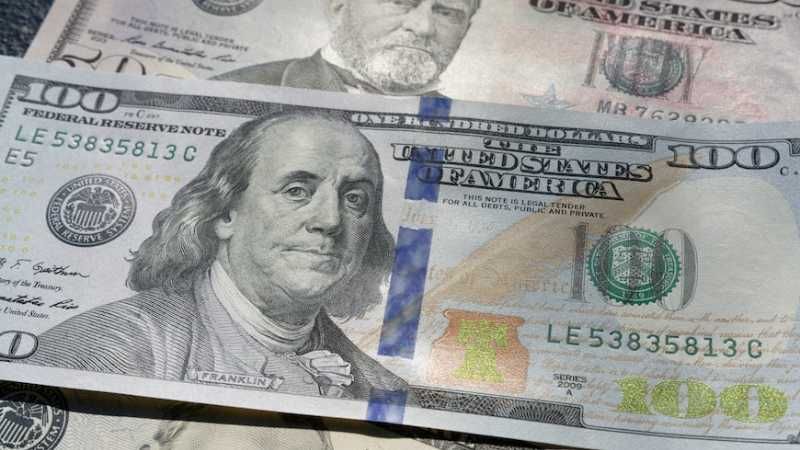
The dollar fell to its lowest level in more than a year on Wednesday following the publication of U.S. consumer price data, which showed a “softer” core price increase last month.
The DXY, an index that keeps up with the greenback’s performance against a group of major currencies, hit 100.54, the lowest since April last year. According to analysts, the new consumer price data increased expectations that the Federal Reserve would soon stop hiking rates.
“Today’s softer core inflation release reinforces our base case and the market’s initial read on the Fed’s last rate decision that the U.S. central bank will only be able to hike one further time this cycle,” wrote Monex Europe head of F.X. analysis Simon Harvey.
Data revealed that core consumer prices in the U.S. increased by 0.2 percent in June, against earlier estimates of 0.3 percent. It marked the lowest increase in core prices, excluding food and energy, in almost two years. Core consumer prices rose by 4.8 percent year-over-year, against earlier predictions of a five percent increase.
Fed fund futures predict that the Fed will increase its key rate by 25 basis points at the July 25-26 meeting. This increase will bring the rate to the 5.25 to 5.50 range. Investors have also lowered their expectations of another rate hike before the year’s end, from a 35 percent chance to 25 percent.
Meanwhile, the euro rose to $1.1134, the highest in 15 months. In the Asian forex market on Thursday local time, the euro advanced to $1.1148. Previously, Nomura senior G10 FX strategist Jordan Rochester said the euro could trade at $1.14 by end-September.
Against the Japanese yen, the U.S. dollar fell to a six-week low of 138.17. Later in Asian trading, the yen hit 138.08 per dollar, the strongest since mid-May. Over the past five sessions, the yen has posted more than four percent gain. Analysts say the Bank of Japan’s decision regarding its yield control policy may affect the yen’s value in the market.
Like the eurozone currency, sterling also hit a 15-month peak of $1.30 on Wednesday. Analysts explained that the expectations of further rate hikes by the Bank of England fueled the pound’s rally. Data point out that inflation in the U.K. is the highest among major economies.
Across Asia, emerging market currencies rallied, with the Malaysian ringgit jumping one percent to trade at 4.6 per dollar. The Thai baht also rose slightly amid the market’s anticipation of the country’s leadership change.
Bonds, oil
The yield of two-year Treasury notes, which keeps up with rate expectations, declined by 15.2 basis points to 4.744 percent. Meanwhile, the 10-year Treasury yield stood at 3.865 percent on Wednesday, falling by 11.9 basis points. The yield curve between the two benchmark notes remained inverted, indicating expectations of a recessionary environment.
In Germany, the 10-year yield fell to 2.552 percent after hitting a four-month high of 2.679 percent on Monday. Sit Investment Associates senior portfolio manager Bryce Doty said the bond market got “the relief from inflation it was hoping for.”
Oil prices rose following signs of cooling U.S. inflation. Brent crude futures strengthened by 0.5 percent to trade at $80.47 a barrel early in Asian trading. Meanwhile, U.S. West Texas Intermediate crude futures gained 0.4 percent to $76.04. I.G. market strategist Yeap Jun Rong said the falling dollar supported the increase.
Yeap also said that recently published Chinese import data helped boost oil prices. In June, China imported 52.06 million metric tons of crude oil. This figure represented a 45.3 percent jump from the same month last year.