


The difference between a crypto portfolio that survives a bear market and one that doesn’t often comes down to a single decision: how much sits in stablecoins versus altcoins. Get the ratio wrong, and you’re either watching gains evaporate during corrections or sitting idle while others capture rallies.
This guide covers allocation frameworks for different risk profiles, rebalancing approaches, and the specific risks that come with each asset type—so you can build a portfolio structure that matches your goals heading into 2026.
Your capital is at risk. This article does not constitute financial advice.
What Is Crypto Portfolio Allocation
A balanced crypto portfolio typically allocates 5–10% to stablecoins for liquidity and risk management, with the remaining 90–95% distributed between volatile assets like Bitcoin, Ethereum, and altcoins. According to analysis from XBTO and CoinTracker, a high-risk growth portfolio might increase altcoin exposure to 30% or more while reducing stablecoins. Conservative models, on the other hand, favor higher stablecoin reserves to cushion against volatility.
So what does crypto portfolio allocation actually mean? It refers to how you divide your holdings across different types of digital assets. The central question usually comes down to how much capital sits in stable, low-volatility assets versus higher-risk tokens with growth potential.
Here are the key terms worth knowing:
Stablecoins: Digital assets pegged to fiat currencies like USD, designed to hold a consistent value
Altcoins: Any cryptocurrency other than Bitcoin, from Ethereum down to small-cap tokens
Portfolio allocation: The way you distribute capital across asset categories based on your risk tolerance and goals
Why Balancing Stablecoins and Altcoins Matters
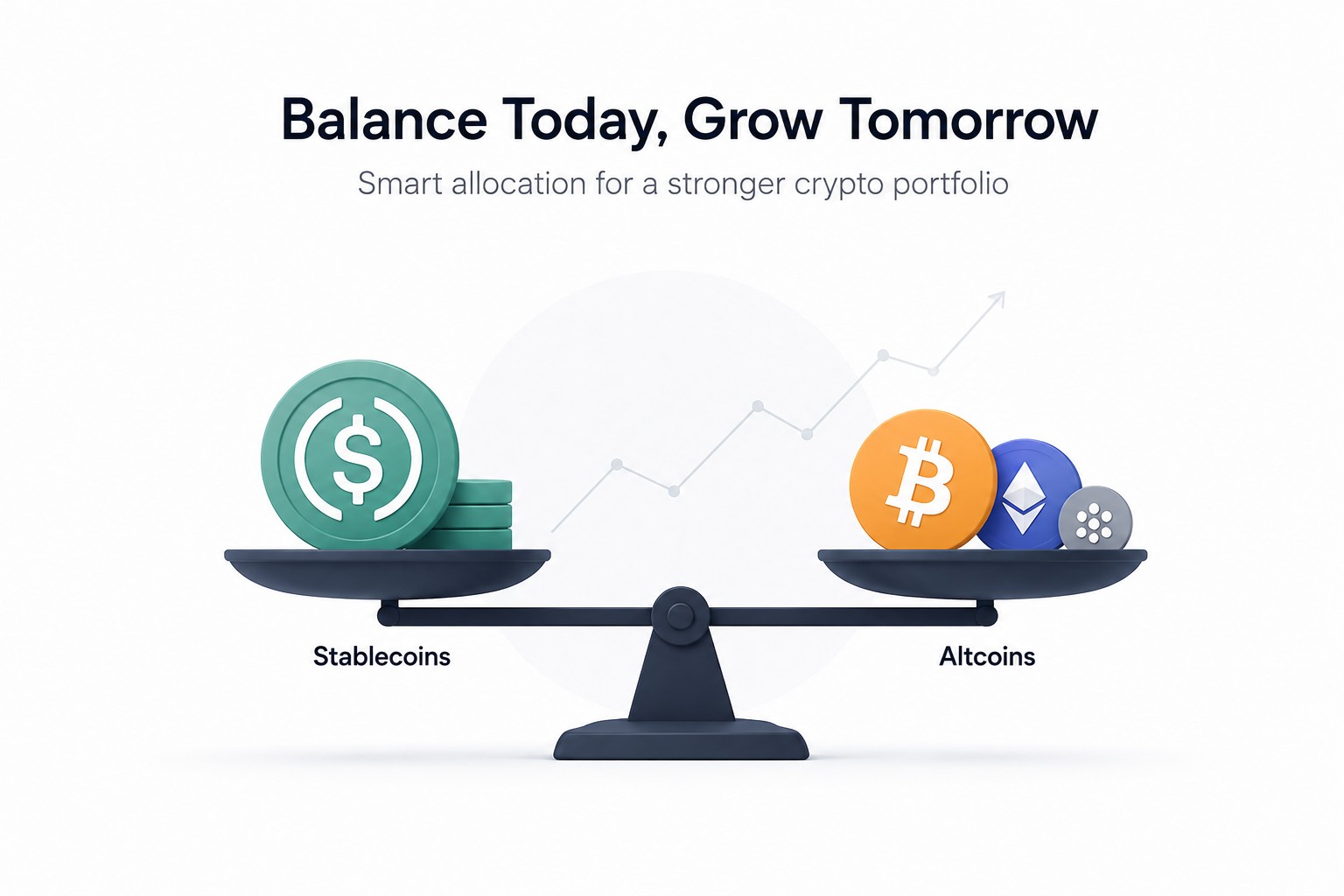
The trade-off is fairly simple. Stablecoins preserve capital and give you liquidity, acting as “dry powder” when buying opportunities appear. Altcoins offer growth potential but come with significantly higher volatility.
When a portfolio leans too heavily in one direction, problems emerge. Too much in altcoins, and a market downturn could erase months of gains in days. Too much in stablecoins, and you might sit on the sidelines during rallies.
| Asset Type | Primary Role | Risk Level | Liquidity |
|---|---|---|---|
| Stablecoins | Capital preservation, dry powder | Low (with de-peg risk) | High |
| Large-cap altcoins | Growth exposure | Medium-High | Medium-High |
| Small-cap altcoins | Speculative gains | Very High | Variable |
Types of Crypto Assets to Include in Your Portfolio
Before settling on percentages, it helps to understand what categories exist. Most diversified portfolios include some combination of the asset types below.
Bitcoin and Ethereum as Core Holdings
BTC and ETH typically serve as the foundation of crypto portfolio allocation. Their market dominance and relative stability compared to smaller altcoins make them natural anchors for long-term holdings. Many institutional frameworks, including guidance from XBTO, recommend allocating 60–70% of a crypto portfolio to Bitcoin and Ethereum alone.
Stablecoins for Stability and Liquidity
Stablecoins act as hedges against volatility and as reserves for buying opportunities. That said, stablecoin selection matters because different issuers carry different risk profiles. USDC, USDT, and DAI each have distinct backing mechanisms and regulatory standings, which affects how they behave during market stress.
Large-Cap Altcoins for Growth Exposure
Large-cap altcoins like Solana, Avalanche, and Chainlink offer growth potential with moderate risk relative to smaller tokens. Projects in this category typically have established ecosystems, active development teams, and meaningful trading volume. They’re volatile compared to Bitcoin, yet more stable than tokens with thin liquidity.
Small-Cap Altcoins for Speculative Positions
Low-cap altcoins represent the high-risk, high-reward segment of the market. Emerging tokens in DeFi, gaming, or AI sectors can deliver outsized returns during bull runs. However, they can also lose 80% or more during corrections. Most allocation frameworks suggest limiting exposure to small-cap altcoins to a modest portion of total holdings.
Crypto Portfolio Diversification Strategies

How you structure your allocation depends on your goals and how much risk you’re comfortable with. Four approaches appear consistently across both institutional and retail frameworks.
1. Apply the Core-Satellite Strategy
The core-satellite model places stable, high-conviction holdings at the center of your portfolio. Smaller “satellite” positions then provide speculative exposure to emerging trends.
Core: Stable holdings like BTC, ETH, and stablecoins that anchor the portfolio
Satellites: Smaller, riskier positions spread across various altcoin sectors
This approach allows you to capture upside from new narratives without overexposing your portfolio to any single trend.
2. Allocate Based on Your Risk Tolerance
Your stablecoin-to-altcoin ratio depends largely on how much drawdown you can tolerate emotionally and financially. A conservative investor might hold the majority in BTC and stablecoins with minimal altcoin exposure. An aggressive investor might flip that ratio entirely, accepting larger swings in exchange for higher potential returns.
Conservative: Majority in stablecoins and BTC, minimal altcoin exposure
Balanced: A mix of core holdings and a diversified altcoin basket
Aggressive: Majority in altcoins, accepting higher volatility for growth potential
3. Diversify Across Altcoin Sectors
Sector diversification helps avoid concentration in one narrative. If 80% of your altcoin holdings sit in gaming tokens and that sector underperforms, your entire altcoin allocation suffers disproportionately.
Spreading exposure across Layer 1s, Layer 2s, DeFi protocols, gaming, and AI tokens reduces this concentration risk. You might not catch every rally, but you also won’t miss them all.
4. Use Stablecoins as Strategic Dry Powder
“Dry powder” refers to capital held in reserve for buying opportunities. Holding a portion of your portfolio in stablecoins allows you to deploy capital during market dips without selling existing positions at a loss.
This approach proved valuable during the 2022 bear market. Investors with stablecoin reserves could accumulate assets at significantly lower prices while others were forced to sell or sit idle.
Model Portfolios for Different Risk Profiles
Sample allocation frameworks can serve as starting points, though individual circumstances vary widely. The table below shows relative weightings across three common profiles.
| Asset Class | Conservative | Balanced | Aggressive |
|---|---|---|---|
| Bitcoin & Ethereum | Heavy | Moderate | Moderate |
| Stablecoins | Heavy | Moderate | Light |
| Large-Cap Altcoins | Light | Moderate | Heavy |
| Small-Cap Altcoins | Very Light | Light | Moderate |
Conservative Crypto Portfolio Allocation
A conservative allocation weights heavily toward stablecoins and BTC, with minimal altcoin exposure. This approach suits investors focused on capital preservation who prefer lower volatility over higher potential returns.
Balanced Crypto Portfolio Allocation
A balanced split distributes holdings more evenly between core assets and altcoins, with stablecoins serving as a buffer. According to Zipmex, a typical balanced portfolio might allocate 40–60% to blue-chip assets like BTC and ETH, 25–35% to established altcoins, and 10–20% to stablecoins.
Aggressive Crypto Portfolio Allocation
A growth-focused allocation places the majority in altcoins with minimal stablecoin holdings. Higher potential returns come with higher drawdown risk. During bear markets, some altcoins have lost 90% or more of their value from peak to trough.
How to Allocate Across Stablecoin and Altcoin Categories
Once you’ve decided on broad percentages, the next step involves subdividing within each category. Both stablecoins and altcoins benefit from internal diversification.
Splitting Your Stablecoin Holdings
Diversifying across multiple stablecoins reduces de-peg risk. USDC and USDT are centralized stablecoins backed by reserves held by their issuers. DAI, by contrast, is a decentralized stablecoin collateralized by crypto assets through the MakerDAO protocol.
Each carries different risk profiles related to issuer trust, regulatory exposure, and collateral mechanisms. Holding a mix provides some protection if one issuer faces problems.
Distributing Across Altcoin Sectors
Within your altcoin allocation, avoiding overexposure to a single trend or narrative matters. If most of your altcoin holdings concentrate in one sector and that sector cools off, your portfolio takes a disproportionate hit.
Spreading positions across DeFi, infrastructure tokens, gaming, and emerging categories like AI creates more balanced exposure.
How Often to Rebalance Your Crypto Portfolio
Rebalancing means adjusting your holdings to maintain target allocations after market movements shift your percentages. If altcoins rally and suddenly represent 50% of your portfolio instead of 30%, rebalancing brings that back in line.
There are several common approaches:
Threshold-based: Rebalance when allocations drift beyond a set range, such as plus or minus 5%
Time-based: Rebalance on a regular schedule, whether monthly or quarterly
Event-based: Rebalance after major market moves or significant news events
Crypto’s volatility often triggers rebalancing more frequently than traditional portfolios. Some investors check allocations monthly while others prefer quarterly reviews to avoid overtrading.
Risk Management for Stablecoin and Altcoin Portfolios
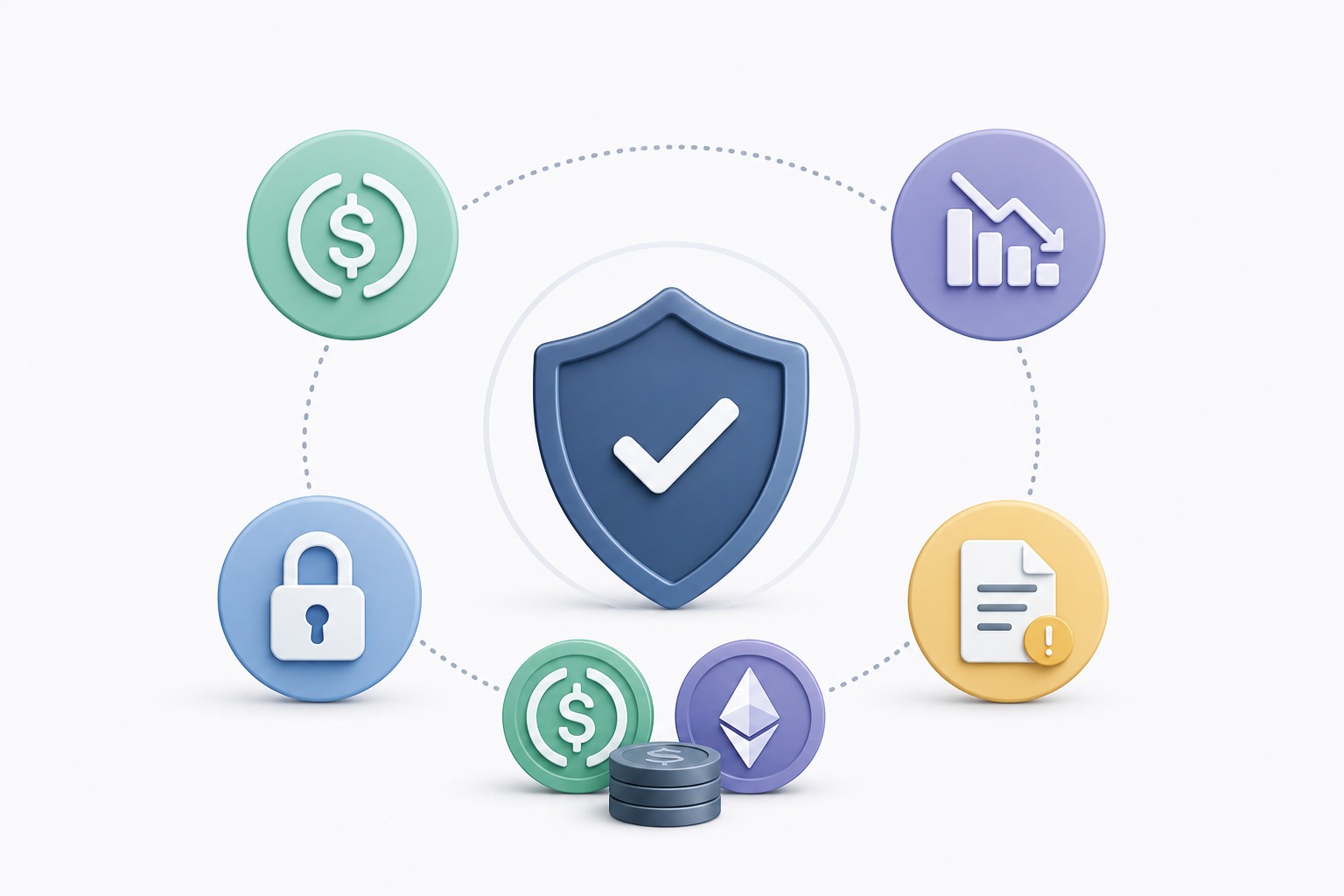
Every asset type carries specific risks that affect portfolio construction. Understanding these risks helps inform allocation decisions.
Stablecoin De-peg Risk
De-pegging occurs when a stablecoin loses its 1:1 peg to its underlying asset. The 2023 USDC de-peg event, triggered by Silicon Valley Bank’s collapse, demonstrated that even major stablecoins can temporarily lose value. During that event, USDC briefly traded below $0.90 before recovering.
Holding multiple stablecoin types across different issuers mitigates this concentration risk.
Altcoin Volatility and Drawdown Risk
Altcoins can lose significant value during bear markets. Tokens that gained 500% during bull runs have subsequently dropped 95% or more. Position sizing and diversification across sectors help manage this exposure, though they don’t eliminate it.
Exchange and Custody Considerations
Not all holdings belong on a single exchange. The FTX collapse in 2022 reminded investors that platform risk is real and can result in total loss of funds held on an exchange. Self-custody via hardware wallets offers greater security for long-term holdings, while exchange custody may suit active traders who require quick access.
Market Signals That Affect Stablecoin and Altcoin Ratios
Several indicators may prompt allocation adjustments over time:
Market sentiment shifts: Fear versus greed indicators can signal when markets are overheated or oversold
Macroeconomic events: Interest rate decisions and regulatory announcements often move crypto markets
On-chain activity: Network usage trends across altcoin sectors can indicate growing or declining adoption
These signals don’t dictate specific actions, but they can inform when to review your allocation and consider adjustments.
Factors to Consider When Choosing an Altcoin Exchange
Your exchange choice affects how effectively you can manage your portfolio. Several factors matter when selecting a platform:
Asset availability: Does the exchange list the altcoins in your allocation plan?
Liquidity depth: Can you enter and exit positions without significant slippage?
Fee structure: Trading fees, withdrawal fees, and any hidden costs add up over time
Security track record: History of hacks or breaches indicates operational risk
Regulatory standing: Jurisdiction and compliance status affect long-term platform viability
Stay Informed and Refine Your Crypto Portfolio Strategy
Portfolio allocation isn’t a one-time decision. Market conditions change, new assets emerge, and your own risk tolerance may shift over time. Regular portfolio reviews help keep your allocation aligned with your goals as circumstances evolve.
For timely cryptocurrency news and market analysis, AtoZ Markets’ crypto coverage provides updates on developments affecting digital asset portfolios.
FAQs About Crypto Portfolio Allocation
How do stablecoin and altcoin allocations affect crypto taxes?
Swapping between stablecoins and altcoins may trigger taxable events in many jurisdictions. Even trading one stablecoin for another can create a taxable transaction depending on local regulations. Consulting a tax professional familiar with digital assets before rebalancing helps avoid unexpected liabilities.
Can investors earn yield on stablecoin allocations?
Some platforms offer yield on stablecoin deposits through lending or liquidity provision. These options carry additional smart contract and platform risks beyond simple holding. The collapse of several yield platforms in 2022 highlighted that higher yields often come with higher risks.
What is the difference between USDC, USDT, and DAI for portfolio use?
USDC and USDT are centralized stablecoins backed by reserves held by their issuers, Circle and Tether respectively. DAI is a decentralized stablecoin collateralized by crypto assets through the MakerDAO protocol. Each carries different risk profiles related to issuer trust, regulatory exposure, and how the peg is maintained.
Is it too late to start diversifying a crypto portfolio?
Portfolio diversification is a risk management practice applicable at any market stage. Whether markets are rising, falling, or moving sideways, the principles of allocation and diversification remain relevant. There’s no deadline for adopting sound allocation practices.