

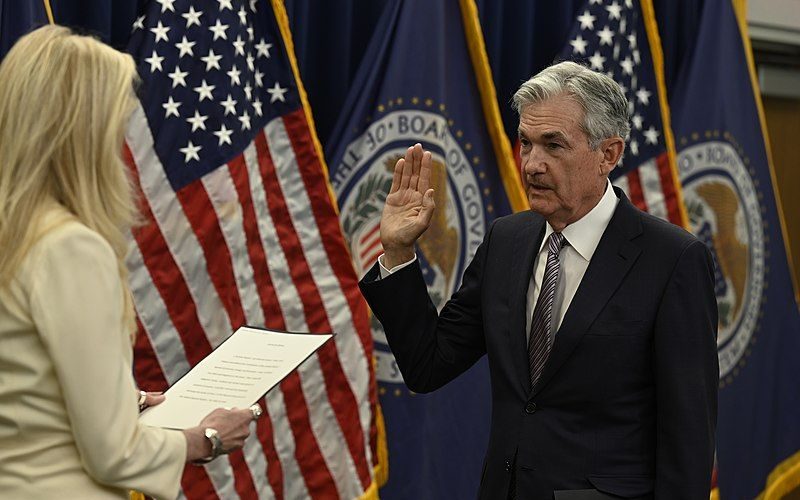
The U.S. Federal Reserve raised the benchmark lending rate by a quarter of a percentage point on Wednesday, bringing the federal funds rate to a 16-year high of more than five percent.
In the latest policy meeting, the central bank omitted the previous statement that indicated further tightening was “likely.” Fed chairman Jerome Powell said the federal agency would monitor the incoming data to determine whether a hike would be “appropriate.”
The recent policy decision came amid signs of an economic downturn. Data showed that the U.S. economy grew by 1.1 percent year-over-year in the first quarter, lower than an earlier forecast of two percent. Manufacturing activities contracted for six-straight months, albeit signaling a slower decline in April.
“A decision on a pause was not made today.”
Jerome Powell, Chairman of the Federal Reserve
The Fed consecutively raised the interest rate since March last year to bring down inflation to the two percent target. The monetary tightening campaign led to higher borrowing costs for households and businesses, which the central bank said would “weigh on economic activity, hiring, and inflation.”
Data showed that average interest rates for credit cards had risen to nearly 21 percent from around 16 percent since the Fed started increasing the benchmark rate. Average interest rates for personal loans climbed to 10.82 percent from 10.30 percent, while average rates for 30-year fixed-rate mortgages jumped to 6.43 percent from 3.76 percent.
According to the Fed, the extent of its policy’s impact “remains uncertain” because it takes a while to work through the economy. Nevertheless, Bankrate chief financial analyst Greg McBride said the central bank “has created their own credibility crisis on inflation.”
Fed fund futures forecast another 25-basis-point rate hike by the Fed in the next policy meeting. However, the Fed is expected to cut rates at least twice before the end of 2023 due to further declines in economic growth.
Investors currently anticipate the incoming jobs report and consumer price data to provide a better outlook for the Fed’s future policy. According to estimates, the U.S. added 180,000 nonfarm payrolls in April, the lowest in over two years. Meanwhile, the market predicts that headline consumer price growth will be at 5.2 percent, a decline from six percent in March.
Banking stresses, debt-ceiling
At the press conference after the policy meeting, Powell discussed the impact of recent banking stresses and the debt-ceiling issue on the economy. The banking crisis in the U.S. last March began after Silicon Valley Bank and Signature Bank suddenly closed their businesses after experiencing a liquidity crunch. The Fed chair said the “severe period of stress” had been “resolved.”
Analysts, however, have argued that the banking stresses push banks to tighten their lending requirements. Coupled with the already-high interest rates due to the Fed’s policy, it is now harder for businesses and households to obtain loans. According to analysts, this will lead to reduced productivity among private enterprises and a decline in household consumption.
U.S. lawmakers are still debating whether to raise the debt ceiling as the country may default on its debts within this year. Powell said the U.S. should raise its debt ceiling promptly because the impact of debt payment failure would be “unprecedented,” although he also said that the debt ceiling issue is a matter of “fiscal policy.”
The U.S. House of Representatives passed a bill to raise the nation’s debt limit by $1.5 trillion, with a condition of capping spending growth at one percent annually. Republican House Speaker Kevin McCarthy said while the bill would likely not pass the Senate, it would open up a dialogue with President Joe Biden.