

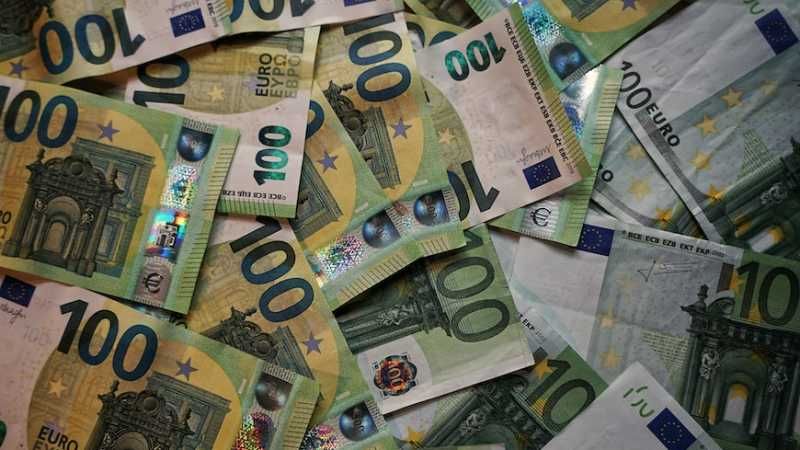
The euro strengthened by 0.27 percent against the U.S. dollar to $1.0880 in the Asian forex market on Monday local time after posting its biggest weekly loss in eight and half months.
Last week, the eurozone currency saw a 1.54 percent loss against the greenback. It traded sideways on Sunday at around $1.0850. Analysts said the unresolved debt ceiling crisis in the U.S. contributed to the stronger euro.
President Joe Biden was supposed to meet with top politicians on Friday regarding the crisis after failing to reach an agreement at the first meeting. The postponement propped up the U.S. dollar last week. Officials have rescheduled the meeting to this Tuesday, with analysts saying that the delay does not necessarily mean the talks are breaking down.
U.S. policymakers remain at “loggerheads” regarding the national debt limit as the White House wants to increase the ceiling without any requirements while Republicans demand the administration cut spending and limit its growth. According to analysts, the U.S. may default on its debt as soon as this summer if policymakers fail to reach an agreement on time.
The dollar index, which keeps up with the greenback’s performance against six other major currencies, fell slightly by 0.19 percent to 102.49 but remained close to the five-week high of 102.75 achieved earlier in the session.
The greenback traded 0.18 percent higher against the Japanese yen to 136.01 after posting a 0.67 percent weekly gain. On the other hand, it weakened against sterling, with the British currency gaining 0.28 percent at $1.248. Sterling lost 1.45 percent against the dollar last week.
Meanwhile, the U.S. dollar traded 0.38 percent higher at 19.654 Turkish lira, the highest in two months. The weekend elections in Turkey, which analysts predicted would head for a runoff after President Tayyip Erdogan outperformed predictions, influenced the currency’s movement in the market.
The dollar was down 0.75 percent to 33.725 baht in onshore Thai trading. Opposition parties in Thailand secured an election win on Sunday even though analysts said it was uncertain whether they would form the next administration. Mizuho Bank head of economics and strategy Vishnu Varathan said the expectations of political stability with this win might fuel the baht rally.
Dollar may continue to decline
Analysts pointed out that several factors played a role in the dollar’s recent strength, including fears about the debt ceiling crisis, concerns about the U.S. inflation and global economic outlook. RBC Capital Markets head of Asia FX strategy Alvin Tan said the increase in U.S. bond yields over the past two days supported the dollar too.
Recent economic data, however, signaled a slowing rate of inflation in the U.S. Based on a preliminary reading, the consumer confidence index for May dropped to 57.7 from 63.5 in the previous month. Analysts previously estimated the index to hit 63.0. Another reading also showed that the one-year inflation expectations dropped from 4.6 percent to 4.5 percent in May.
Experts predicted that the U.S. dollar will continue to decline in the coming months due to cooling inflation in the country and the likelihood of interest rate cuts by the Federal Reserve.
“If you remove the uncertainty around the debt ceiling situation, the sentiment has been turning bearish against the dollar.”
Khoon Goh, ANZ head of Asia research
The U.S. dollar will likely face pressures from the euro in the market as European Central Bank (ECB) official and Bundesbank chief Joachim Nagel indicated last week that the central bank would continue to raise the benchmark rate to manage inflation. The ECB increased the zone’s interest rate by 25 basis points in its latest policy meeting.
Analysts explain that the expectations of a narrower interest rate gap between the dollar and the euro may stimulate the latter’s rally, like what happened last month.