

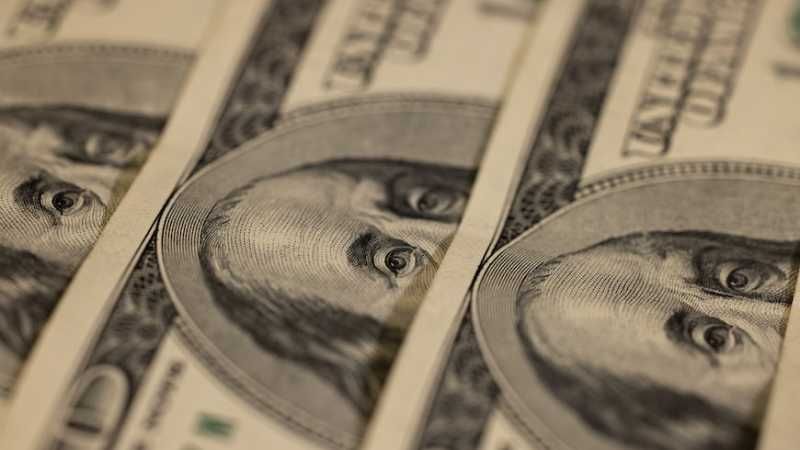
The dollar advanced to a seven-week high on Wednesday as the debt ceiling talks among U.S. policymakers showed progress.
The dollar index, a tracker of the greenback’s value versus a basket of six major peers, breached the 103.12 level, the highest since late March. The euro fell to a six-week low of $1.0811 against the dollar during the forex trading session.
In the afternoon, the dollar gained 0.9 percent against the Japanese yen to trade at 137.59. It earlier hit a two-week high of 137.625 yen per dollar.
The Chinese yuan breached 7 per dollar for the first time in five months amid new signs of uneven post-pandemic economic recovery in the country. Against the yuan, the dollar gained 0.1 percent to 7.0077 in the offshore forex market.
“We’re seeing a few factors boost the U.S. dollar today.”
Helen Given, FX Trader at Monex USA
Monex USA FX trader Helen Given said the optimism on the U.S. ability to avoid a default helped boost the U.S. dollar. President Joe Biden and Republican Kevin McCarthy said they were determined to reach a deal soon to raise the government’s $31.4 trillion debt limit and avoid a “catastrophic” impact of a debt default.
Analysts have warned that both chambers of Congress need to pass a deal before June 1. For months, Republicans and Democrats have debated the national debt ceiling, with the former demanding cuts on public expenditures.
According to analysts, the White House has acknowledged the need to limit spending despite earlier arguing that it will inhibit some government programs.
Convera senior market analyst Joe Manimbo said the debt ceiling crisis would boost the dollar “regardless of how they appear to be going.” An unresolved debt ceiling discussion will boost the dollar because the currency is considered a “safe haven.”
Nevertheless, Manimbo said any positive tone in the negotiations would “add to the dollar’s renewed popularity.”
Solid economic data boosts dollar
The recently published U.S. single-family housing report, which shows a 1.6 percent year-over-year growth in April, supports the dollar rally in the forex market, according to analysts.
The report followed retail sales data, which increased last month, albeit at a smaller-than-expected rate. Analysts said the underlying trend in retail sales remained strong for the month. Industrial production also advanced by one percent.
“Recent data is painting a more resilient picture of U.S. growth compared to Europe,” said Manimbo.
Analysts said the indication that the U.S. economy remained resilient despite the Federal Reserve’s consecutive interest rate hikes increased the probability that rate cuts would come later than anticipated. The market previously predicted that the U.S. central bank would begin cutting rates in September.
According to Manimbo, “elevated inflation” and “low unemployment on this side of the pond” would also make Fed officials consider cutting the interest rate later. Given pointed out that several voting members in the Fed had made “hawkish” remarks regarding the central bank’s future policy.
Austan Goolsbee, president of the Chicago Fed, previously said it was “far too premature” for the central bank to consider rate cuts. Meanwhile, Cleveland Fed President Loretta Mester said inflation pressures remained persistent.
The Fed began its monetary tightening campaign in March last year as inflation soared in the country after the COVID-19 pandemic. Fed officials have repeatedly asserted that they are committed to lowering inflation to the two percent target.
It last raised the benchmark rate by 25 basis points, pushing the federal funds rate to the range of 5.00 to 5.25 percent.
In 2022, the U.S. dollar rallied significantly on the expectations that the Fed would continue to raise the interest rate. On the other hand, the U.S. major stock indexes posted their worst annual performance in several years.