

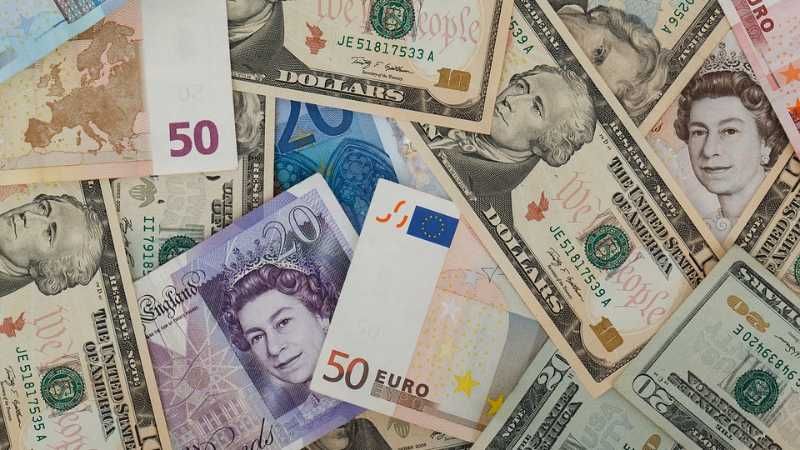
The dollar slowly climbed on Monday even after the Federal Reserve released the quarterly Senior Loan Officer Opinion Survey report, which showed that banks have increased lending standards for business and consumer loans following the collapse of Silicon Valley Bank, Signature Bank and Silvergate Bank.
The banks would also tighten the standards across all loan categories for the remainder of this year, according to the report.
Around 46 percent of all banks said they had raised the loan qualifications for business, up from just below 45 percent in the previous quarter.
More banks were easing their credit standards than raising them last year, but now almost 50 percent are tightening. Back during the 2008 financial crisis, the figure hit 80 percent.
This survey follows the Fed’s decision to raise interest rates again last week to a range between 5 and 5.25 percent, the highest since August 2007. It is the tenth time the Fed has increased the rates since March 2022.
“The Committee seeks to achieve maximum employment and inflation at the rate of 2 percent over the longer run,” the Fed said on May 3. “In support of these goals, the Committee decided to raise the target range for the federal funds rate to 5 to 5-1/4 percent.”
Moody’s Investors Service Senior VP Warren Kornfeld would not say whether this decision is entirely bad for the economy.
“The impact of tightening credit to small businesses, which are very large employers, and banks are major providers of credit to small and mid-sized businesses,” Kornfeld told CNN.
“So depending on how long this tightening and how significant this tightening is, has the potential to have material impacts on how fast the economy grows.”
Meanwhile, the U.S. dollar drove Treasury yields upwards after the survey, as traders lowered their predictions regarding the extent of Fed rate cuts later this year to alleviate the strain on the market.
“[The survey] wasn’t as bad as expected. There’s still a tightening in credit conditions that is coming … but overall, at this stage, the survey is not depicting a credit crunch ahead. And I think that was good news,” said Rodrigo Catril, a currency strategist at National Australia Bank, as per CNBC.
GBP hits fresh high
The sterling has gained 4.7 percent against the dollar ahead of the Bank of England’s expected interest rate hike later this week.
The U.K. central bank is reportedly set to raise interest rates to 4.5 percent in an attempt to fight the country’s raging inflation — the highest among G7 nations. In March, U.K. inflation persisted at a high level of 10.1 percent.
Laith Khalaf, Head of Investment Analysis at AJ Bell, said people have “expected” the BoE to raise the interest rate in the upcoming May meeting since inflation is still very high in the U.K.
“The U.K.’s headline inflation rate is running around twice that in the U.S., so it’s easy to see why we might have to swallow another few doses of monetary medicine.”
Laith Khalaf, AJ Bell Financial Analyst
Catril also underlined the BoE’s hesitancy in the past, but the country’s tight wage growth and labor market, combined with its stubbornly high inflation, are likely to push it into action,
“The BoE has been sort of this reluctant hiker, they keep on saying that they expect inflation to ease and that they’re concerned about the cost of living and the slowdown in the economy,” he said.
“Yet, the reality is that the U.K. economy has proven to be quite resilient this year … the important thing will be the messaging out of what the bank says.”