

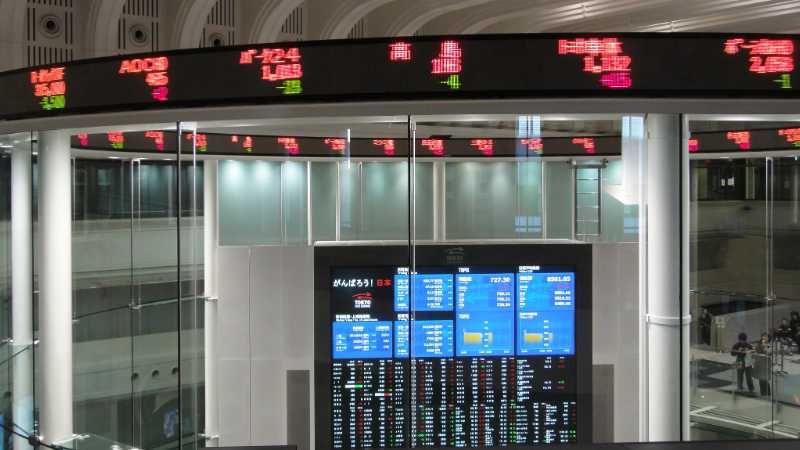
Asian stocks ended mixed on Thursday after the U.S. Federal Reserve paused its monetary tightening campaign for the first time in more than a year.
The MSCI’s Asia Pacific index, excluding Japan, closed 0.19 percent lower at 648.25. Japan’s Nikkei 225 slid 0.051 percent to 33,485.49. In South Korea, the Kospi index also lost 0.40 percent to conclude the trading session at 2,608.54.
Hong Kong’s Hang Seng, on the other hand, jumped by 2.17 percent to end the trading day at 19,828.92. The Shanghai Composite rose by 0.74 percent to 3,252.98. China’s blue-chip CSI 300 index also closed the session at 3,925.50 after adding 1.59 percent.
Australia’s benchmark gained 0.19 percent to 7,175.30, while New Zealand’s S&P/NZX 50 added 0.076 percent to conclude the day at 11,687.45.
Fed chairman Jerome Powell said Wednesday the U.S. central bank’s latest rate policy decision would give the economy and financial markets a “breathing room.” Powell explained that keeping the rate steady at the current 5.00 to 5.25 percent range would provide more time for the economy to “absorb” previous hikes.
The Fed began its monetary tightening cycle in March last year to manage the U.S.’s soaring inflation. Analysts point out that recent economic data indicate slowing inflation. Per consumer price data published on Tuesday, the U.S. headline inflation was at four percent in May, lower than the earlier estimates of 4.1 percent. U.S. producer prices also declined more than expected last month due to falling energy and food costs.
“And ideally, by taking a little more time, we won’t go well past the level where we need to go.”
Jerome Powell, Federal Reserve Chairman
YouHodler chief of markets Ruslan Lienkha, however, said it was “too early” to decide if the Fed had managed to keep inflation under control.
“The Fed can later decide to continue the rate increase or keep high rates for a significantly long time,” said Lienkha, as quoted by the Associated Press. “Such scenarios are quite possible and might obviously disappoint financial markets in one or a few months.”
Fed fund futures predict a significant chance that the Fed will raise its benchmark rate by 25 basis points next month. Investors also forecast the central bank to not begin cutting rates until 2024.
Wall Street ended mixed on Wednesday following the Fed’s rate hike pause. The S&P 500 closed 0.1 percent higher at 4,372.59 after a volatile session. The Nasdaq Composite posted a 0.4 percent gain and ended the session at 13,626.48. Meanwhile, the Dow Jones Industrial Average finished at 33,979.33 after losing 0.7 percent.
Yields, commodities
Following the Fed’s policy announcement, the 10-year Treasury note yield rose to 3.83 percent. The two-year Treasury yield, which indicates short-term Fed policy expectations, rose to 4.68 percent. The yield curve between the two- and 10-year notes remained inverted, signaling expectations for a recession in the U.S.
Germany’s two-year bond yield also rose to 3.1 percent, its highest level since March, immediately after the Fed delivered its policy decision. Analysts say the rising U.S. and German bond yields drive global borrowing costs.
The rising yield supported the U.S. dollar’s rally in Asian forex trading on Thursday local time. It led to higher price pressures for commodities denominated in the greenback. The benchmark U.S. crude oil declined by 13 cents to trade at $68.14 per barrel. The international standard Brent crude fell by 15 cents to $73.05.
Gold also extended its losing streak by falling to a week low of $1,934 an ounce on Thursday. Analysts said gold prices could decline further if they breached its “psychological support” of $1,930.