


Altcoin season—the market phase when alternative cryptocurrencies outperform Bitcoin—typically materializes when 75% of the top 50 altcoins beat BTC’s performance over a 90-day period. According to current index readings and analyst projections, the next sustained altseason could arrive toward late 2026, though early signals may emerge sooner as Bitcoin dominance shifts.
Timing altseason precisely remains elusive, but the patterns are recognizable. This guide covers the key indicators traders watch, how to read the Altcoin Season Index, and what current market conditions suggest about when rotation into altcoins may begin.
Your capital is at risk. Cryptocurrency markets are highly volatile, and this content is for informational purposes only—not financial advice.
What is Altcoin Season
Altcoin season describes a market phase when alternative cryptocurrencies collectively outperform Bitcoin over a sustained period. According to the Blockchaincenter Altcoin Season Index, altseason is officially confirmed when 75% of the top 50 altcoins beat Bitcoin’s performance over a 90-day window. The duration varies—sometimes lasting a few weeks, other times stretching across several months, depending on investor sentiment and overall market liquidity.
So what exactly counts as an altcoin? Any cryptocurrency other than Bitcoin falls into this category. Ethereum, Solana, Cardano, and thousands of smaller tokens all qualify. During altseason, money tends to flow out of Bitcoin and into these alternative projects as traders chase higher percentage gains.
The rotation happens for a straightforward reason. After Bitcoin rallies significantly, many investors look to diversify their profits into altcoins, which historically offer greater upside potential—though with considerably more risk attached.
When Does Altcoin Season Start
Pinpointing the exact start date for altcoin season remains difficult, yet certain patterns show up consistently across market cycles. The primary trigger is typically Bitcoin stabilizing after a major price surge, which creates room for capital to flow into riskier assets.
Typical Timing Within the Crypto Market Cycle
Crypto markets tend to move through four distinct phases: accumulation, markup, distribution, and markdown. Altseason usually arrives during the later stages of the markup phase, after Bitcoin has already posted substantial gains and its market dominance begins declining.
Historically, this rotation kicks in several months after Bitcoin halving events. The halving cuts new BTC supply in half, often sparking a Bitcoin rally first. Then altcoins follow as investors rotate their profits into smaller projects.
How Long Altcoin Season Usually Lasts
Past altseasons have ranged from a few weeks to several months. The 2017 and 2021 cycles each featured extended periods of altcoin outperformance, though intensity and duration differed between them.
No guaranteed timeline exists. Market conditions, regulatory developments, and macroeconomic factors all shape how long altseason persists once it begins. Some cycles see a single sustained altseason, while others feature multiple shorter bursts.
Read Also: Best Altcoins for the Next Bull Run: 10 Hidden Gems for 2026
Key Altcoin Season Indicators
Traders rely on several signals to identify when altseason may be approaching. No single indicator provides certainty on its own, but combining multiple signals paints a clearer picture of market conditions.
Bitcoin Dominance Declining Below Key Levels
Bitcoin dominance measures BTC’s share of the total cryptocurrency market capitalization. When dominance drops, capital is flowing into altcoins rather than concentrating in Bitcoin.
A declining dominance reading—particularly below 50%—often coincides with altseason conditions. On the flip side, rising dominance suggests Bitcoin is outperforming and altseason remains unlikely. Watching this metric over weeks rather than days provides more reliable signals.
Increased Altcoin Trading Volume
Rising trading volume across altcoin pairs indicates growing market interest. Volume spikes often precede or accompany price rallies, making this a useful confirmation signal for traders watching rotation patterns.
The key is looking for volume increases across multiple altcoins rather than isolated projects. Broad-based volume growth suggests genuine market rotation, while volume concentrated in a single asset typically reflects speculation rather than a wider trend.
Crypto Fear and Greed Index Readings
The Crypto Fear and Greed Index measures market sentiment on a scale from 0 (extreme fear) to 100 (extreme greed). Altseason peaks often coincide with extreme greed readings, while low sentiment can paradoxically signal an approaching rally.
| Index Reading | Sentiment | Typical Market Phase |
|---|---|---|
| 0–24 | Extreme Fear | Potential accumulation zone |
| 25–49 | Fear | Early recovery possible |
| 50–74 | Greed | Rally underway |
| 75–100 | Extreme Greed | Potential altseason peak |
Social Media and Search Trend Surges
Social sentiment often moves inversely to price action at turning points. When altcoin chatter hits multi-year lows, a rally may be approaching—fewer retail participants means less crowded positioning and more room for upside.
Conversely, surging social media mentions and search trends during a rally may indicate altseason is maturing or nearing its peak. Extreme hype often marks the later stages of a cycle rather than the beginning.
What is the Altcoin Season Index
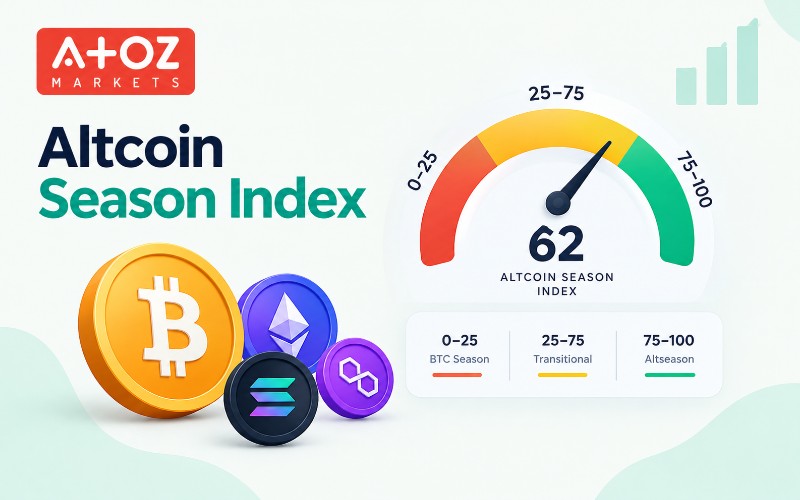
The Blockchaincenter Altcoin Season Index is the most widely referenced tool for tracking altseason status. It provides a real-time reading of whether market conditions favor altcoins or Bitcoin at any given moment.
How the Alt Season Index is Calculated
The index evaluates performance of the top 50 cryptocurrencies against Bitcoin over a rolling 90-day period. Here’s how the calculation works:
- Threshold: If 75% or more of the top 50 coins outperform Bitcoin, the index confirms altcoin season
- Exclusions: Stablecoins like Tether and USDC are removed from the calculation since they don’t fluctuate meaningfully
- Scale: The index ranges from 0 (strong Bitcoin season) to 100 (strong altcoin season)
How to Read the Altcoin Season Index Current Value
An index reading below 25 indicates strong Bitcoin season conditions. Readings between 25 and 75 suggest a transitional market where neither Bitcoin nor altcoins dominate clearly. Values above 75 confirm altseason is underway.
Checking this metric regularly helps contextualize whether broader market conditions favor altcoin exposure. The Blockchaincenter website displays the current reading alongside historical data for comparison.
How Bitcoin Dominance Affects Altseason
Bitcoin dominance and altseason share an inverse relationship. When dominance rises, Bitcoin is capturing a larger share of total crypto market value—typically at the expense of altcoins. When dominance falls, the opposite occurs.
| Market Phase | Bitcoin Dominance Trend | Typical Altcoin Performance |
|---|---|---|
| Bitcoin Season | Rising | Underperforming BTC |
| Transitional | Stable | Mixed performance |
| Altcoin Season | Falling | Outperforming BTC |
For altseason to begin, Bitcoin usually stabilizes after a significant rally. This consolidation period allows traders to rotate profits into altcoins, which drives dominance lower and altcoin prices higher. The relationship isn’t perfectly mechanical, but the pattern has repeated across multiple market cycles.
History of Past Altcoin Seasons
Looking at historical patterns helps contextualize current market conditions, though past performance never guarantees future results. Each cycle brings its own characteristics while following a broadly similar structure.
Alt Season Patterns After Bitcoin Halving Cycles
Bitcoin halving events occur approximately every four years, cutting the block reward miners receive in half. Historically, halvings precede major bull markets—and eventually, altseasons.
The pattern typically unfolds in stages:
- Stage 1: Bitcoin rallies first as reduced supply meets steady demand
- Stage 2: Bitcoin stabilizes as early investors take profits
- Stage 3: Profits rotate into altcoins, triggering altseason
Duration and Peak Patterns from Previous Cycles
The 2017 altseason saw explosive gains across many altcoins, with some projects rising dramatically over several months. The 2021 cycle featured two distinct altseason phases—one in early 2021 and another later that year.
Each cycle differs in duration and intensity. However, the underlying pattern—Bitcoin leads, then altcoins follow—has remained consistent. The gap between Bitcoin’s rally and altseason’s arrival has varied from weeks to several months depending on market conditions.
Current Altseason Signals and Market Outlook
Where does the market stand right now? Current indicators suggest Bitcoin remains dominant, though conditions could shift as the cycle progresses.
What the Altcoin Season Index Shows Now
According to recent Binance reporting, the Altcoin Season Index dropped to 31, indicating Bitcoin is currently outperforming alternative coins. While early 2026 saw the index reach a three-month high, it still fell short of confirming an official altseason.
This reading places the market in a transitional phase. Traders watching for altseason confirmation will want to see sustained readings above 75 before drawing conclusions about a broader rotation.
Analyst Views on When Altcoin Season Will Start
Several analysts have shared perspectives on potential altseason timing. Crypto trader Don Wedge noted that “the third altcoin season could begin within 112 days,” referencing patterns from the 2017 and 2021 cycles, according to Coinpedia reporting.
Key themes from analyst commentary include:
- Market Rotation: Expectations of eventual rotation from Bitcoin into AI, gaming, and DeFi projects
- Liquidity Conditions: Looser monetary policy could fuel capital re-entry into riskier assets
- Timing Estimates: Some analysts cite mid-to-late 2026 as a possibility, following traditional market cycle patterns
How to Prepare for the Next Altcoin Season
Preparation matters more than prediction. Rather than trying to time the exact start, focusing on positioning and risk management tends to yield better outcomes over full market cycles.
Diversification Strategies Across Altcoin Sectors
Emerging sectors showing activity include artificial intelligence tokens, blockchain gaming projects, and decentralized finance protocols. Spreading exposure across multiple sectors reduces concentration risk compared to betting heavily on a single project or theme.
Allocation across different market cap tiers also plays a role. Large-cap altcoins like Ethereum typically move first during altseason, while smaller projects may offer greater percentage gains—and greater risk—later in the cycle.
Risk Management During Volatile Altcoin Rallies
Altcoins are significantly more volatile than Bitcoin. Position sizing becomes critical during altseason, as overexposure to speculative assets can lead to substantial losses during corrections.
Tip: Many traders use a core-satellite approach, maintaining larger positions in established projects while allocating smaller amounts to higher-risk opportunities. This structure allows participation in altseason upside while limiting downside exposure.
Tracking Altcoin Season News with AtoZ Markets
Staying informed on market developments helps identify when conditions may be shifting. The AtoZ Markets Cryptocurrency News section provides timely updates on altcoin market movements, regulatory developments, and analyst perspectives.
Monitoring multiple information sources—including the Altcoin Season Index, Bitcoin dominance charts, and market news—offers a more complete picture than relying on any single indicator. Combining quantitative metrics with qualitative news coverage tends to produce better-informed decisions.
FAQs About Altcoin Season
Which altcoins typically perform best during altcoin season?
Large-cap altcoins like Ethereum often move first, followed by mid-caps and smaller projects in trending sectors such as AI, gaming, and DeFi. Performance varies significantly based on market narratives during each specific cycle.
What happens to altcoins when Bitcoin price falls sharply?
Altcoins generally decline more severely than Bitcoin during market downturns due to their higher volatility and lower liquidity. Drawdowns of 50% or more are common for smaller altcoins during corrections.
Is altcoin season guaranteed to happen after every Bitcoin rally?
No, altseason is not guaranteed and depends on multiple factors including market sentiment, liquidity conditions, and the macroeconomic environment. Some Bitcoin rallies have not been followed by meaningful altcoin outperformance.
Can altcoin season occur without Bitcoin reaching new all-time highs?
Yes, altseason can occur when Bitcoin consolidates at any level. The key factor is capital rotation rather than specific Bitcoin price targets—what matters is whether money flows from BTC into altcoins.
Does altcoin season affect all altcoins equally?
No, performance varies significantly across altcoins based on sector trends, project fundamentals, and market capitalization size. Some altcoins may rally substantially while others in the same cycle underperform Bitcoin.