

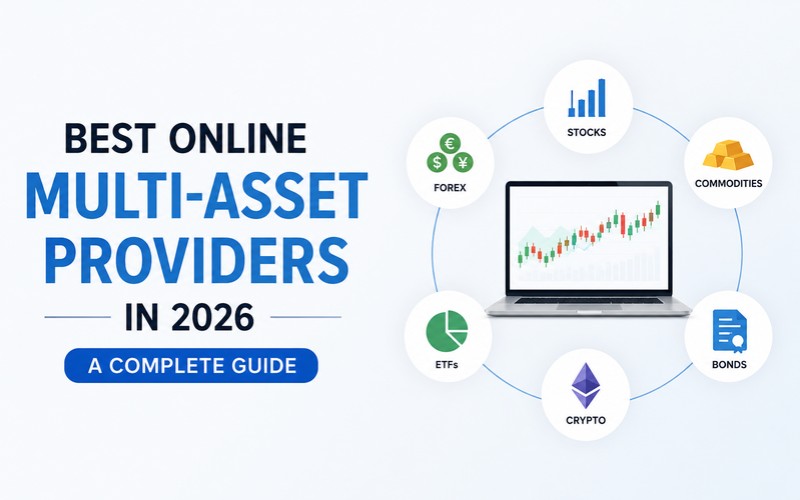
The modern investor doesn’t trade in silos. A trader in Singapore might hold a long position on gold, hedge it with a currency pair, diversify into tech stocks, and allocate a portion to Bitcoin — all within a single session. This is the reality of multi-asset trading in 2026: fluid, fast, and global.
A multi-asset provider is a broker or trading platform that gives you access to more than one asset class from a single account. Rather than maintaining separate accounts for forex, stocks, commodities, and crypto, a true multi-asset provider centralizes everything — allowing you to monitor, manage, and execute across markets from one dashboard.
But not all multi-asset platforms are equal. Some offer thousands of instruments across every major asset class; others limit themselves to a narrower range dressed up with marketing language. The differences in fees, regulation, platform quality, and execution can be dramatic — and for active traders, they translate directly into performance.
In this guide, we review seven of the best online multi-asset providers available globally in 2026: XM, FP Markets, AvaTrade, Plus500, Exness, Capital.com, and IUX. We evaluate each on the criteria that matter most: the breadth of assets, regulatory standing, trading costs, platform quality, and who each provider is best suited for.
What Makes a Great Multi-Asset Trading Provider?
Before comparing platforms, it’s important to define what separates a genuine multi-asset provider from a single-market broker with a few extras bolted on. Here are the key criteria:
1. Breadth of Asset Classes
True multi-asset providers offer meaningful access to several of the following: forex, equities (stocks/shares), stock indices, commodities (metals, energies, agriculture), bonds, ETFs, and cryptocurrencies. Access to one or two of these alongside forex does not make a platform “multi-asset” in the meaningful sense.
2. Instrument Count
Beyond asset classes, the number of instruments within each class matters. A broker offering 50 forex pairs, 500 stocks, 15 indices, and 20 commodities is far more versatile than one with 5 pairs across the board.
3. Regulation and Client Protection
Multi-asset brokers handle more complex products and larger portfolio values. Strong, multi-jurisdictional regulation from tier-1 authorities (FCA, ASIC, CySEC, MAS) is non-negotiable.
4. Platform and Tools
Sophisticated multi-asset trading requires professional-grade charting, multi-asset portfolio views, risk management tools, and ideally access to third-party platforms (MT4, MT5, cTrader, TradingView).
5. Competitive Pricing
Each asset class has its own fee structure — spreads on forex, commissions on stocks, financing on overnight positions. A good multi-asset broker keeps costs transparent and competitive across all classes, not just the headline forex pairs.
6. Account Types and Flexibility
Flexible account structures (standard, raw/ECN, Islamic swap-free, professional) ensure that the platform can serve different trader types and strategies.
7. Education and Research
Because multi-asset trading involves understanding multiple markets simultaneously, quality research, economic calendars, market analysis, and educational content add significant value.
Top 7 Best Online Multi-Asset Providers in 2026
1. XM Group
Overview: Founded in 2009 under Trading Point of Financial Instruments, XM has grown into one of the most recognizable names in global retail trading, serving over 10 million clients across 190+ countries. Its exceptional reach — supported by 30+ language options — makes it one of the most accessible multi-asset platforms on the planet, particularly in emerging markets across Asia, Africa, the Middle East, and Latin America.
XM operates multiple regulated entities and has built its reputation on low barriers to entry, strong educational resources, and a consistent multi-asset offering delivered through MetaTrader 4 and MetaTrader 5.
Asset Classes & Instruments: – Forex: 55+ currency pairs – Stocks (CFDs): 1,300+ global equities (US, EU, UK, and AU listed) – Indices: 25+ major and minor global indices – Commodities: Metals (gold, silver), energies (oil, natural gas), agricultural products – Cryptocurrencies: 10+ major crypto CFDs – Bonds and Blends: Select interest rate and bond products
Total Instruments: 1,400+
Fee Structure: – Standard Account: No commission; spreads from 1.0 pip (EUR/USD) – Ultra Low Account: No commission; spreads from 0.6 pip — one of the most competitive no-commission accounts available – XM Zero Account: Spreads from 0.0 pip + $3.50 commission per lot (round turn) – Minimum Deposit: $5 — exceptionally low – Inactivity Fee: $15/month after 90 days of inactivity (begins relatively quickly) – Deposit/Withdrawal Fees: None charged by XM
Regulation & Safety: – CySEC (Cyprus) — EU regulation – ASIC (Australia) – DFSA (Dubai) – IFSC (Belize) — for offshore clients – Client funds held in segregated accounts; negative balance protection for EU/AU clients
Platform Support: MT4, MT5, XM WebTrader, XM Mobile App
Pros: – Genuinely accessible with a $5 minimum deposit – Very broad geographic reach — available in 190+ countries – Competitive Ultra Low account with tight spreads and no commission – Excellent educational hub: webinars, video tutorials, market analysis – 30+ language support — best-in-class for non-English speakers – Regular promotions and loyalty rewards program
Cons: – IFSC (Belize) regulation used for some non-EU/AU clients — lower protection than tier-1 regulators – Inactivity fee triggers after only 90 days – Crypto and bond selection narrower than specialist platforms – No cTrader or TradingView support
Best Suited For: Beginner-to-intermediate forex and multi-asset traders, traders in emerging markets, and anyone seeking a low-cost entry point into multi-asset trading with strong educational support.
Also Read: XM Full Review
2. FP Markets
Overview: Founded in Sydney in 2005 and regulated by ASIC, FP Markets (First Prudential Markets) has built a formidable reputation as a premier ECN/STP broker for serious traders. What sets FP Markets apart in the multi-asset space is its rare combination of ultra-tight RAW spreads, genuine direct market access (DMA) for equities via its IRESS platform, and support for an exceptionally wide range of third-party trading tools.
In 2026, FP Markets stands as one of the most technically capable multi-asset brokers available — less well-known to retail beginners, but highly regarded among professional and semi-professional traders.
Asset Classes & Instruments: – Forex: 70+ currency pairs — among the widest forex selection available – Stocks (CFDs): 10,000+ global equities as CFDs (AU, US, UK, EU, HK) – Stocks (DMA): Real ASX-listed shares via IRESS platform (genuine ownership) – Indices: 20+ global indices as CFDs – Commodities: Metals, energies, agricultural products – Cryptocurrencies: 10+ crypto CFDs – ETFs: Select global ETF CFDs – Bonds: Government bond CFDs
Total Instruments: 10,000+ (including DMA shares)
Fee Structure: – Standard Account: No commission; spreads from 1.0 pip – Raw Account: Spreads from 0.0 pip + $3.00 commission per lot (round turn) — one of the lowest raw commissions globally – IRESS Account: Access to real stock DMA; brokerage from 0.06% (AU) with higher minimum deposits – Minimum Deposit: $100 (MT4/MT5); $1,000 (IRESS) – Inactivity Fee: None – Deposit/Withdrawal Fees: None
Regulation & Safety: – ASIC (Australia) — primary and highly trusted regulation – CySEC (Cyprus) — EU clients – CMA (Kenya) — East African clients – SVG FSA — offshore entity – Client funds held in segregated Tier-1 Australian bank accounts
Platform Support: MT4, MT5, cTrader, TradingView, IRESS, Autochartist
Pros: – RAW account with $3/lot commission is among the lowest cost ECN pricing globally – 10,000+ instruments — genuinely one of the broadest multi-asset offerings – Real DMA stock ownership via IRESS — rare among CFD brokers – Support for every major third-party platform (MT4, MT5, cTrader, TradingView) – No inactivity fees – Fast execution with minimal slippage — ideal for scalpers and algo traders
Cons: – Less brand recognition than larger competitors – IRESS platform requires higher minimum deposit and learning curve – Educational and research content less robust than XM or Capital.com – Offshore SVG entity used for some regions — weaker regulatory protection
Best Suited For: Intermediate-to-advanced forex and multi-asset traders, scalpers, algorithmic traders, and Australian investors who want real stock DMA access alongside CFD trading.
Also Read: FP Markets Full Review
3. AvaTrade
Overview: Founded in Dublin in 2006 and regulated across six continents, AvaTrade is one of the most broadly licensed multi-asset brokers in the world. With over 400,000 active clients across 150+ countries, it has earned a reputation for regulatory reliability, platform diversity, and a unique product offering that includes vanilla options trading via its proprietary AvaOptions platform — a feature almost no other retail broker provides.
AvaTrade’s multi-asset credentials are strong: it covers all major asset classes and supports a wider variety of trading platforms than most competitors, including dedicated social/copy trading integrations.
Asset Classes & Instruments: – Forex: 55+ currency pairs (majors, minors, exotics) – Stocks (CFDs): 600+ global equities (US, EU, UK, JP, AU) – Indices: 25+ global stock indices – Commodities: Metals, energies, agricultural commodities – Cryptocurrencies: 20+ crypto CFDs – ETFs: 60+ ETF CFDs – Bonds: Government bond CFDs (US T-bills, EU bonds) – Vanilla Options: Via dedicated AvaOptions platform (calls and puts on major forex pairs)
Total Instruments: 1,250+
Fee Structure: – No commissions; entirely spread-based pricing – EUR/USD spread: From 0.9 pip — competitive for a no-commission model – Inactivity Fee: $50 after 3 months of no trading; $100 dormant account fee after 12 months — high and activates quickly – Minimum Deposit: $100 – Deposit/Withdrawal Fees: None charged by AvaTrade
Regulation & Safety: – Central Bank of Ireland (CBI) — EU regulation – ASIC (Australia) – FSA (Japan) – FSCA (South Africa) – ADGM/FSRA (Abu Dhabi) – ISA (Israel) – BVI FSC (British Virgin Islands) — offshore
This six-continent regulatory footprint is virtually unmatched in the retail broker industry.
Platform Support: MT4, MT5, AvaTradeGO (proprietary mobile), AvaOptions, ZuluTrade, DupliTrade, AvaSocial
Pros: – Broadest regulatory footprint of any broker on this list — six continents – AvaOptions platform is unique for retail options trading on forex pairs – ZuluTrade and DupliTrade integrations for social/copy trading – Clean and intuitive AvaTradeGO mobile app – No deposit or withdrawal fees – Multilingual 24/5 customer support
Cons: – Inactivity fee is among the most aggressive in the industry ($50 after just 3 months) – Spreads slightly wider than ECN/RAW alternatives like FP Markets or Pepperstone – No real stock ownership — CFD and options only – Not available to US residents
Best Suited For: Multi-asset traders who value regulatory breadth, traders interested in vanilla options, social/copy traders, and global investors who need a broker available across many jurisdictions.
Also Read: AvaTrade Full Review
4. Plus500
Overview: Founded in Israel in 2008 and listed on the London Stock Exchange (LSE: PLUS), Plus500 is one of the world’s most widely recognized CFD trading platforms. It has built its brand on a philosophy of radical simplicity — a clean, proprietary platform that strips away complexity and lets traders focus purely on execution. With over 2,800 instruments across multiple asset classes and clients in 50+ countries, Plus500 is a genuine multi-asset provider.
While it lacks the depth of tools that professional traders demand, its accessibility, financial strength as a listed company, and broad asset coverage make it a strong choice for retail traders who prioritize ease of use.
Asset Classes & Instruments: – Forex: 60+ currency pairs – Stocks (CFDs): 1,800+ global equities (US, EU, UK, AU, and more) – Indices: 30+ global indices, including proprietary indices – Commodities: Metals, energies, agriculture, and soft commodities – Cryptocurrencies: 15+ major crypto CFDs – ETFs: 100+ ETF CFDs – Options (Limited): CFD options on select instruments
Total Instruments: 2,800+
Fee Structure: – No commissions; entirely spread-based – Competitive spreads on major pairs (e.g., EUR/USD from 0.6 pip, though variable) – Inactivity Fee: $10/month after 3 months of inactivity – Overnight Funding: Applied to leveraged positions held overnight – Minimum Deposit: $100 – Guaranteed Stop Order Fee: Available at a premium spread
Regulation & Safety: – FCA (United Kingdom) – ASIC (Australia) – CySEC (Cyprus) – MAS (Singapore) – FMA (New Zealand) – FSCA (South Africa)
As a publicly listed company, Plus500 publishes full financial accounts, adding an extra layer of transparency rarely seen among private brokers.
Platform Support: Plus500 WebTrader (proprietary), Plus500 Mobile App — no MT4/MT5 support
Pros: – Extremely clean, intuitive proprietary platform — minimal learning curve – 2,800+ instruments across all major asset classes – Publicly listed company with full financial transparency – Regulated in six major jurisdictions – Unlimited demo account – No deposit or withdrawal fees
Cons: – No MT4, MT5, or cTrader support — limited to proprietary platform – No research, market commentary, or educational content of note – Inactivity fee after only 3 months – CFD-only platform — no real stock ownership – Not suitable for professional or algorithmic traders
Best Suited For: Casual and beginner-to-intermediate retail traders who want a simple, clean interface with broad multi-asset access and no learning curve.
Also Read: Plus500 Full Review
5. Exness
Overview: Founded in 2008 in Cyprus, Exness has emerged as one of the fastest-growing retail brokers globally, reporting monthly trading volumes that rank it among the top three forex brokers in the world by volume. What distinguishes Exness in the multi-asset space is its ultra-competitive pricing — including near-zero spreads on some accounts — combined with instant withdrawal processing (the industry standard is 1–5 business days) and unlimited leverage options (for professional clients in certain jurisdictions).
Exness has expanded its asset offering significantly in recent years, making it a credible multi-asset choice, particularly for traders who prioritize cost and capital management flexibility above all else.
Asset Classes & Instruments: – Forex: 100+ currency pairs — one of the widest selections available – Stocks (CFDs): 100+ global equities (US, EU) – Indices: 20+ major global indices – Commodities: Metals, energies – Cryptocurrencies: 40+ crypto CFDs — a strong offering – Energies & Metals: Gold, silver, WTI, Brent crude
Total Instruments: 300+ (narrower in equities than some competitors, but deep in forex and crypto)
Fee Structure: – Standard Account: No commission; spreads from 0.3 pip (competitive) – Standard Cent Account: No commission; ideal for micro-lot trading – Raw Spread Account: Spreads from 0.0 pip + $3.50 commission per lot – Zero Account: Zero spreads on top 30 instruments + $3.50 commission – Pro Account: Low spreads from 0.1 pip; no commission – Minimum Deposit: $10 — very accessible – Inactivity Fee: None – Withdrawal Fees: None — and instant processing is a standout feature
Regulation & Safety: – FCA (United Kingdom) – CySEC (Cyprus) – FSCA (South Africa) – FSA (Seychelles) – CBCS (Curaçao) – FSC (British Virgin Islands)
Note: some clients are served by offshore entities (Seychelles, BVI) with weaker protections. Confirm which entity applies to your country.
Platform Support: MT4, MT5, Exness Terminal (proprietary web), Exness Trader (mobile app)
Pros: – Instant withdrawal processing — genuinely industry-leading – No inactivity fee – Very competitive spreads across the account range – 100+ forex pairs — excellent for currency traders – Strong crypto CFD offering (40+ coins) – $10 minimum deposit — accessible to all – High leverage options available (region-dependent)
Cons: – Stock CFD selection is relatively narrow (100+) vs. FP Markets or Plus500 – Some clients served by offshore entities with weaker investor protections – Proprietary Exness Terminal lacks the depth of MT5 or cTrader – Research and educational content is limited – Unlimited leverage (where offered) poses significant risk for inexperienced traders
Best Suited For: Cost-conscious active traders, forex specialists, crypto CFD traders, and traders who need rapid capital mobility through instant withdrawals.
Also Read: Exness Full Review
6. Capital.com
Overview: Founded in 2016 and headquartered in London, Capital.com is one of the most innovative multi-asset platforms of the past decade. It has distinguished itself through the integration of artificial intelligence — specifically its proprietary “Investmate” AI learning tool and behavioral analytics engine that alerts traders to their own cognitive biases in real time. With over 5 million users and more than 6,000 instruments, Capital.com is a modern, tech-forward multi-asset provider with genuine substance behind the marketing.
Capital.com holds regulation from multiple tier-1 authorities, offers zero-commission pricing, and provides full TradingView chart integration — a significant competitive advantage in 2026.
Asset Classes & Instruments: – Forex: 138 currency pairs — the widest selection on this list – Stocks (CFDs): 3,200+ global equities (US, UK, EU, AU, HK, and more) – Indices: 80+ global indices – Commodities: 35+ including metals, energies, and soft commodities – Cryptocurrencies: 200+ crypto CFDs — the widest on this list – ETFs: 600+ ETF CFDs – Bonds: Select bond CFDs
Total Instruments: 6,000+ — the broadest offering among all seven providers reviewed
Fee Structure: – Zero commission on all instruments – Spread-based pricing: EUR/USD from 0.6 pip (competitive) – No inactivity fee – Minimum Deposit: $20 — very low – Overnight Fees: Apply to leveraged positions (standard industry practice) – Deposit/Withdrawal Fees: None
Regulation & Safety: – FCA (United Kingdom) – CySEC (Cyprus) – ASIC (Australia) – SCB (Bahamas) — offshore entity – NBRB (Belarus)
Tier-1 regulation from FCA, CySEC, and ASIC covers the vast majority of clients.
Platform Support: Capital.com WebTrader (proprietary), Capital.com Mobile App, TradingView (full integration), MT4
Pros: – 6,000+ instruments — the most comprehensive multi-asset selection on this list – 138 forex pairs and 200+ crypto CFDs lead the field – Full TradingView integration — best-in-class charting for web-based trading – Zero commissions and no inactivity fees – AI-powered learning tools and bias detection — genuinely useful for developing traders – $20 minimum deposit – Excellent mobile app
Cons: – CFD-only platform — no real asset ownership – AI-features, while innovative, are still developing in depth – Offshore Bahamas entity used for some markets – Less suitable for advanced algorithmic traders (no cTrader, limited MT4 depth) – Not available to US residents
Best Suited For: Beginner-to-intermediate traders who want the broadest possible asset selection, technology-forward investors, crypto-active traders, and anyone who wants TradingView charts integrated into their broker account.
Also Read: Capital.com Full Review
7. IUX Markets
Overview: IUX (IUX Markets) is a newer but rapidly growing multi-asset broker headquartered in Thailand, with a primary focus on the Southeast Asian and broader Asia-Pacific retail trading market. Regulated by the FSA (Seychelles) and LFSA (Malaysia), IUX has built a loyal client base by offering a straightforward, cost-competitive multi-asset trading environment with strong multilingual support tailored to Asian markets — including Thai, Vietnamese, Indonesian, Chinese, and more.
While IUX does not yet carry the tier-1 regulatory credentials of the other brokers on this list, it has established a growing presence and offers a genuinely competitive product, particularly for Asian retail traders seeking tight spreads and low minimum deposits.
Asset Classes & Instruments: – Forex: 70+ currency pairs – Stocks (CFDs): 100+ global equities (US, EU) – Indices: 20+ global indices – Commodities: Gold, silver, oil, natural gas – Cryptocurrencies: 20+ crypto CFDs – ETFs: Select global ETF CFDs
Total Instruments: 300+
Fee Structure: – Standard Account: No commission; spreads from 1.5 pip – Pro Account: No commission; spreads from 0.0 pip — competitive zero-spread offering – Raw Account: Ultra-tight spreads + small commission per lot – Minimum Deposit: $1 (Standard); $500 (Pro/Raw) — the lowest minimum deposit on this list – Inactivity Fee: None – Deposit/Withdrawal Fees: None; supports local Asian payment methods (e.g., bank transfers, QR Pay, and regional e-wallets)
Regulation & Safety: – FSA (Seychelles) — offshore regulation – LFSA (Malaysia) — regional Southeast Asian regulation – Client funds segregated; negative balance protection offered
Note: IUX’s regulatory framework is less robust than tier-1 regulated brokers (FCA, ASIC, CySEC). Traders should be aware of this when considering deposit sizes.
Platform Support: MT4, MT5, IUX Mobile App
Pros: – $1 minimum deposit — the lowest barrier to entry in this comparison – Strong Asian market focus with local language support and regional payment methods – Zero-spread Pro account with competitive pricing – No inactivity fees or deposit/withdrawal fees – Good MT4/MT5 support with standard trading tools – Growing instrument range across multiple asset classes
Cons: – Regulation is offshore-only (FSA Seychelles, LFSA Malaysia) — not tier-1 – Smaller instrument selection compared to Capital.com, Plus500, or FP Markets – Limited brand recognition outside Southeast Asia – Research, education, and market analysis tools are basic – Less suitable for traders requiring the protection of FCA or ASIC regulation
Best Suited For: Southeast Asian and Asia-Pacific retail traders, traders with very limited starting capital, and those who need strong local language support and regional payment methods.
Also Read: IUX Full Review
Head-to-Head Comparison Table
| Provider | Instruments | Min. Deposit | Commission | Inactivity Fee | Forex Pairs | Crypto CFDs | Key Regulation | Best For |
|---|---|---|---|---|---|---|---|---|
| XM | 1,400+ | $5 | $0 (Std/Ultra Low) | $15/90 days | 55+ | 10+ | CySEC, ASIC | Emerging Markets / Beginners |
| FP Markets | 10,000+ | $100 | $0 (Std) / $3/lot (Raw) | None | 70+ | 10+ | ASIC, CySEC | Professionals / Scalpers |
| AvaTrade | 1,250+ | $100 | $0 (spread-based) | $50/3 months | 55+ | 20+ | CBI, ASIC, FSCA | Global Regulation / Options |
| Plus500 | 2,800+ | $100 | $0 (spread-based) | $10/3 months | 60+ | 15+ | FCA, ASIC, MAS | Simple / Casual Traders |
| Exness | 300+ | $10 | $0 (Std/Pro) | None | 100+ | 40+ | FCA, CySEC | Cost / Withdrawal Speed |
| Capital.com | 6,000+ | $20 | $0 (all instruments) | None | 138+ | 200+ | FCA, CySEC, ASIC | Broadest Asset Range / Tech |
| IUX | 300+ | $1 | $0 (Std/Pro) | None | 70+ | 20+ | FSA, LFSA | Asia-Pacific / Micro Accounts |
Best Multi-Asset Providers by Category
🥇 Broadest Asset Selection
Capital.com — With 6,000+ instruments across forex, stocks, indices, commodities, ETFs, and crypto, Capital.com offers the widest multi-asset selection of any provider on this list. Its 138 forex pairs and 200+ crypto CFDs are both category-leading.
💹 Best for Forex Trading
Exness — 100+ forex pairs with ultra-competitive spreads (from 0.0 pip on the Zero account), no inactivity fee, and instant withdrawals make Exness the go-to choice for dedicated currency traders.
📊 Best for Stock CFD Access
FP Markets — Over 10,000 instruments including real DMA stock ownership via IRESS places FP Markets in a league of its own for equity access. No other provider on this list comes close.
🪙 Best for Crypto CFDs
Capital.com — 200+ crypto CFDs with zero commissions and TradingView integration make Capital.com the best multi-asset platform for crypto-active traders.
💰 Best for Low Fees
FP Markets (Raw Account) — $3/lot commission with 0.0 pip spreads is the most cost-efficient trading environment on this list for active traders. For passive traders, Capital.com’s zero commission and no inactivity fee is equally compelling.
🌍 Best for Emerging Market Access
XM — A $5 minimum deposit, availability in 190+ countries, and support in 30+ languages make XM the most accessible multi-asset provider for traders in emerging economies.
⚡ Best for Withdrawal Speed
Exness — Instant withdrawal processing (available 24/7) is a category-defining feature. No other broker on this list processes withdrawals as quickly.
🌐 Best Regulation Globally
AvaTrade — Regulated on six continents by the Central Bank of Ireland, ASIC, FSA Japan, FSCA, ADGM, and ISA, AvaTrade’s regulatory breadth is unmatched.
📱 Best Mobile Experience
Capital.com — Its mobile app, combined with TradingView integration and AI-powered features, delivers the most sophisticated and user-friendly mobile multi-asset experience.
🔰 Best for Absolute Beginners
IUX / XM — IUX’s $1 minimum deposit makes it the most accessible entry point. XM’s educational resources and low $5 minimum make it the better all-round choice for new traders who want to learn while they trade.
How Global Regulations Impact Multi-Asset Providers
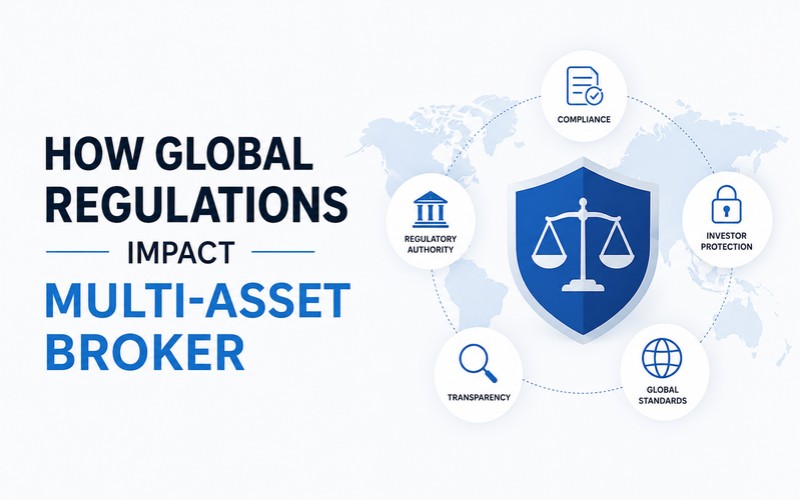
For multi-asset providers specifically, regulation carries extra weight. A broker that handles equities, derivatives, currencies, and crypto simultaneously operates under overlapping regulatory frameworks — and the quality of oversight directly affects how safely your funds are managed.
FCA (UK): The strictest tier-1 regulator for retail brokers. FCA-regulated multi-asset providers must segregate client funds, maintain adequate capital buffers, and comply with MiFID II product governance rules for every asset class offered. Capital.com, AvaTrade, and Exness all hold FCA licences.
ASIC (Australia): ASIC enforces leverage caps on CFDs (30:1 on major forex), negative balance protection, and strict product disclosure standards. FP Markets, AvaTrade, Plus500, and Capital.com are ASIC-regulated.
CySEC (Cyprus/EU): The gateway to EU market access under MiFID II. Allows EU passport for financial services. XM, AvaTrade, FP Markets, Capital.com, and Exness all hold CySEC licences.
FSA (Seychelles) / BVI FSC / SVG FSA: Offshore regulators used by several brokers (Exness, IUX, FP Markets for some entities) where tier-1 regulation is unavailable. These regulators have weaker client protection rules — always identify which regulatory entity governs your account.
Key Takeaway: Wherever possible, opt to be onboarded under a tier-1 regulated entity (FCA, ASIC, CySEC). Check the specific entity at the bottom of your broker’s website — it matters significantly for your protection.
Tips for Choosing the Right Multi-Asset Provider
Match the Platform to Your Strategy If you scalp forex, prioritize raw spreads and execution speed (FP Markets, Exness). If you hold a diversified long-term portfolio of stocks, ETFs, and commodities, breadth and platform quality matter more (Capital.com, AvaTrade).
Consider Your Geography Not all platforms are available in all countries, and some use weaker offshore entities for certain regions. Verify which regulatory entity will govern your account before depositing.
Test Before You Deposit Every provider on this list offers a demo account. Use it to evaluate platform speed, instrument availability, and interface quality with zero risk.
Watch the Hidden Costs Inactivity fees are particularly punishing for casual multi-asset investors. AvaTrade ($50/3 months) and Plus500 ($10/3 months) are especially aggressive. Capital.com, FP Markets, Exness, and IUX charge no inactivity fees at all.
Think About Platform Support If you rely on MT4/MT5 Expert Advisors or TradingView Pine Script strategies, ensure your chosen broker supports these tools natively. FP Markets and XM offer the best third-party platform support on this list.
Common Mistakes Multi-Asset Traders Make
- Diversifying Into Assets You Don’t Understand Having access to 6,000 instruments doesn’t mean you should trade all of them. Multi-asset trading adds complexity. Master one or two asset classes before expanding.
- Ignoring Overnight Financing Costs Multi-asset portfolios held overnight can accumulate significant swap/financing charges across multiple positions. These are often invisible until they appear on your statement.
- Using Maximum Leverage Across All Positions Higher leverage amplifies losses as well as gains. In a multi-asset context, correlated positions at maximum leverage can compound drawdowns catastrophically.
- Choosing a Platform by Instrument Count Alone 6,000 instruments is only useful if the platform is fast, reliable, and cost-effective. A smaller, better-executed platform can outperform a feature-heavy but slow one.
- Not Using Stop Losses on Every Position With multiple open positions across different asset classes, it’s easy to lose track. Always set stop losses, especially when trading overnight or across multiple time zones.
Conclusion
The multi-asset trading landscape in 2026 offers retail investors more choice, more tools, and more markets than ever before. The seven providers reviewed in this guide each bring distinct strengths to the table:
- Capital.com earns its position as the top all-round multi-asset provider, combining the broadest instrument range (6,000+), zero commissions, no inactivity fees, TradingView integration, and AI-powered tools — all from a $20 minimum deposit.
- FP Markets is the professional’s choice — the tightest ECN pricing, 10,000+ instruments (including real stock DMA), and support for every major trading platform make it exceptional for serious multi-asset traders.
- AvaTrade leads on regulatory breadth — regulated on six continents with a unique vanilla options offering via AvaOptions, it’s the go-to for traders who value compliance above all.
- Exness wins on speed and cost — instant withdrawals, near-zero spreads, and 100+ forex pairs make it the strongest option for active currency and crypto CFD traders.
- XM remains the most accessible — a $5 minimum, 190-country availability, and 30+ language support make it the best entry point for traders in emerging markets.
- Plus500 delivers unmatched simplicity — its clean proprietary platform and 2,800+ instruments are ideal for traders who want multi-asset access without the technical complexity.
- IUX is the regional champion for Southeast Asia — with a $1 minimum deposit, local payment methods, and Asian-language support, it fills an important gap in the Asia-Pacific market.
Whichever provider you choose, always verify their regulatory standing in your jurisdiction, use the demo account before depositing real funds, and trade only what you fully understand.
Disclaimer: This article is for informational purposes only and does not constitute financial advice. Trading CFDs and other leveraged products carries a high level of risk and may not be suitable for all investors. You could lose more than your initial investment. Always do your own research and consider consulting an independent financial adviser before making any trading decisions.