

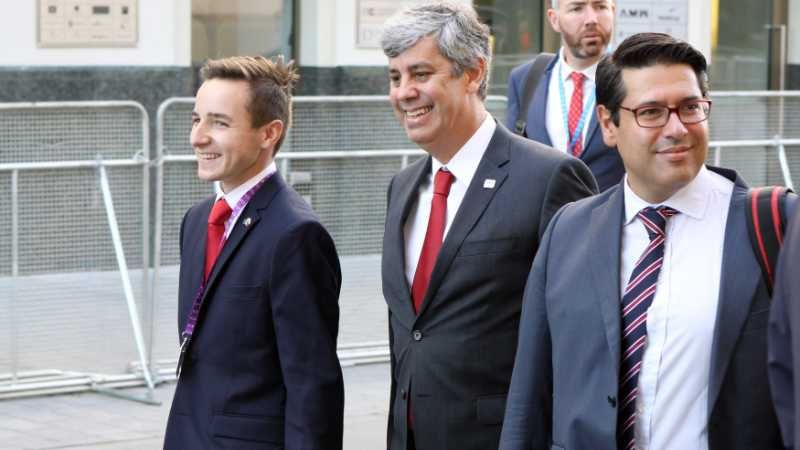
European Central Bank’s Governing Council member Mário Centeno has told Bloomberg that he is optimistic that inflation has reached its peak in Europe and is currently on a swift downward trajectory.
The governor of the Bank of Portugal also hinted that there might be a time lag, but eventually, underlying price growth will follow suit and decrease. Centeno highlighted the significance of “core inflation” as a crucial metric. He noted that it is not decreasing as fas of headline inflation but reminded people that it followed a similar trajectory during its ascent.
“So we need to remain confident too in the way we are fighting inflation,” Centeno said.
According to Bloomberg, the comments from an ECB official with a more cautious stance underscore the importance of considering underlying price growth. This measure excludes volatile factors like energy and food. It is crucial in the ongoing discussion about the appropriate extent of interest rate increases.
While policymakers have signaled a potential rate hike later this month, their plans remain uncertain, and no explicit commitment has been made beyond that.
His evaluation aligns with his more hawkish counterpart, Vice President Luis de Guindos. He recently said that various indicators of core inflation have begun to exhibit signs of easing. While core inflation reached 5.4 percent in June, headline price growth decelerated to 5.5 percent.
Centeno believes that inflation is on a downward trajectory. He emphasized that all indicators point towards this trend but acknowledged the need to maintain a clear monetary policy for it to materialize.
Centeno anticipates that inflation will fall and be lower than three percent by the year’s end. This projection aligns more with the ECB’s two percent inflation rate target. He further explained that headline inflation is on a downward trend and decelerates faster than its previous ascent.
Meanwhile, he observed that economic growth is showing signs of weakening. This observation is supported by indicators such as purchasing managers’ indexes and business confidence.
Centeno commented that the PMI and IFO figures for Germany were unfavorable. “The economy is slowing down, inflation is coming down,” he said.
Last month saw the ECB’s implementation of the most substantial interest rate increase in 22 years. They have also committed to another hike this month, and a further rise in September is possible.
Pandemic savings cushioning consequences of elevated borrowing expenses
As reported by Reuters, the extended time frame for the full effects of rate hikes to materialize is since many households and businesses embarked on a period of elevated borrowing expenses with large cash reserves. These reserves were built up due to significant savings made during the pandemic.
There is also robustness in labor markets on both sides of the Atlantic, and corporate profits have thus far remained resilient. While housing markets are experiencing a cooling trend, they have not entered a severe decline.
According to Aylin Somersan Coqui, the head of German export credit insurer Allianz Trade, although the transmission of monetary policy is taking longer than expected, its impact will manifest towards the latter part of this year. Despite the delay, she highlighted that the effects would become significant and have economic implications.
She added that the pressure from increased borrowing costs would coincide with a decline in corporate profits and the economy. According to her, upcoming elections in various countries next year will also challenge governments to assist struggling businesses.
“I see quite a bit of optimism in the short term, but I see a lot of downside risks if there is a policy mistake, especially from the central banks,” Coqui said.
Daniel Barneix, head of the AFTE association for French corporate treasurers, mentioned that although the weakest balance sheets may encounter difficulties in refinancing at higher levels in the upcoming months, most firms will experience a gradual increase in borrowing costs.
Barneix, who also serves as the deputy finance director at French building materials group Saint-Gobain, said that adjustments to debt levels would be made on a case-by-case basis to prevent the emergence of a systemic crisis.