

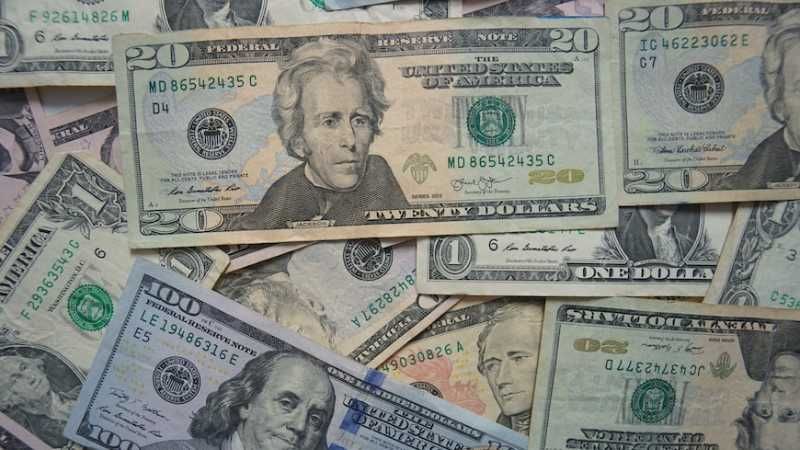
The U.S. dollar extended its decline in Asian forex trading on Thursday local time after the Federal Reserve chair Jerome Powell’s testimony before Congress.
The dollar index was at 102.09 in afternoon trading, close to its five-week low of 102.00. The index fell by almost 0.5 percent in the previous session. Trading volume in Asia declined, with the Chinese and Hong Kong markets closing for a holiday.
Powell told members of the House of Representatives Financial Services Committee that the Fed still “has a long way to go” in its battle against inflation. Powell argued that further rate hikes would be “appropriate” because inflation remained “very far” from the Fed’s target of two percent.
“Looks as if Powell failed to out-hawk markets that were braced for a more explicit ratification of the median projection in the latest dot plot summary of economic projections.”
Karl Schamotta, Chief Market Strategist at Corpay
Corpay chief market strategist Karl Schamotta said the Fed chief had failed to “out-hawk” markets that anticipated “more explicit” signals on the central bank’s policy outlook.
“By sticking to the balanced, data-dependent language deployed in last week’s press conference, he left investors betting that the ongoing deceleration in growth and inflation will translate into one – not two – rate hikes by year end,” said Schamotta.
The U.S. dollar rallied throughout 2022 as the Fed consecutively raised its benchmark rate since March last year. Investors consider the currency as a reliable store of value amid the uncertainty created by high inflation and the central bank’s tightening cycle.
Against the greenback, the euro rose to $1.0995, the highest in more than one month. The euro strengthened by nearly 0.5 percent on Wednesday. Meanwhile, sterling declined by 0.1 percent to $1.2755 ahead of the Bank of England’s (BoE) policy rate decision.
The BoE is expected to hike its interest rate by 25 basis points later. Britain’s consumer price index stood at 8.7 percent on an annual basis last month. ANZ economists predict that the stronger-than-expected inflation rate would increase the BoE’s terminal key rate and prompt the central bank to maintain the high interest rate for longer.
The dollar slid 0.05 percent to 141.81 against the Japanese yen. In the previous session, the dollar hit a seven-month high of 142.37 yen. Analysts explain that the Bank of Japan’s (BoJ) decision to maintain its “ultra-dovish” stance puts pressure on the yen. BoJ board member Asahi Noguchi said Thursday that the ultra-loose policy was necessary to keep wages under control.
The Australian dollar slipped 0.51 percent to $0.6762, while the New Zealand dollar fell by 0.2 percent to $0.6190. According to analysts, the Aussie is sensitive to Chinese economic data because China is one of its largest trade partners.
Positive outlook on risk markets
Analysts say risk markets, such as cryptocurrencies, may experience upward trends. Bitcoin, the largest crypto by market capitalization, gained more than one percent to $30,339 on Wednesday, the first time the token breached $30,000 since April.
BlackRock’s plan to develop a Bitcoin exchange-traded fund has supported the crypto’s rally. Bloccelerate VC co-founder and CEO Kate Laurence said the participation of established financial institutions in the sector had increased the market’s optimism around crypto amid the “regulatory crackdown.”
The equity market is also expected to rally in the coming future, fueled by growth stocks. Analysts explain that the hype surrounding artificial intelligence (AI) technology has supported Wall Street since May. They predict that the AI hype will stay for years, prompting companies to invest more in the technology. The AI hype may push the benchmark S&P 500 above the 5,000 level by next year, analysts say.