

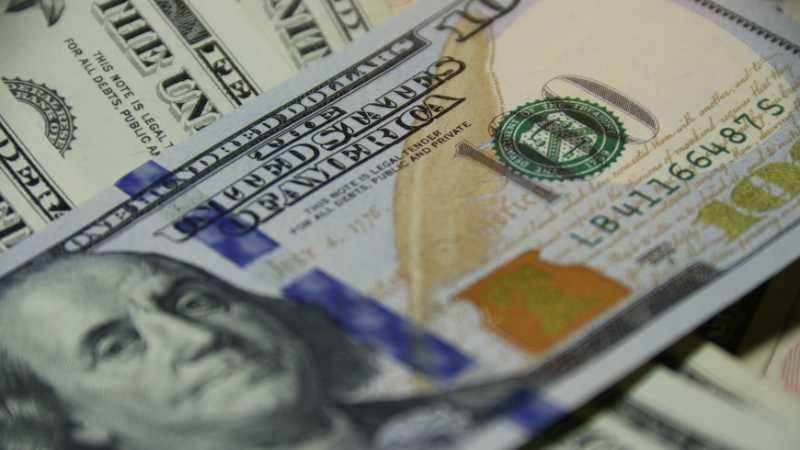
The U.S. dollar traded flat in the Asian forex market on Wednesday local time following better-than-anticipated U.S. housing data.
The dollar index, which tracks its value against six major peers, was steady at around 102.55. The index edged 0.06 percent higher in the previous session. Analysts said signs of an improvement in the U.S. housing market supported the dollar’s strength.
Single-family home construction soared 21.7 percent to 1.631 million in May, the highest in 13 months. Permits issued for housing construction also increased.
The rate-sensitive housing market has declined significantly after the U.S. Federal Reserve began its monetary tightening cycle last year. However, according to market experts, May’s data indicates a “turnaround” in the housing sector.
The greenback was steady against the euro at around $1.0916 early in the session. In the prior session, the eurozone currency slid 0.03 percent to $1.0918 and continued its decline overnight.
Meanwhile, sterling recouped some of its overnight loss to trade at $1.2760 ahead of the Bank of England’s (BoE) policy meeting on Thursday, with the market expecting a 75 chance for a quarter of a percentage point rate hike. Forex analysts predict that the sterling may strengthen to above $1.2800.
Against the Japanese yen, the dollar traded sideways at 140.50. The dollar posted a 0.44 percent decline against the yen the day before. Analysts attributed the yen’s performance to the Bank of Japan’s (BoJ) decision to maintain its “ultra” low rate in the foreseeable future.
The yuan continued to trade around a seven-month low of 7.1826 per dollar in offshore trading as it declined by 0.3 percent overnight. China’s monetary easing plays a role in the yuan’s decline, say analysts.
The People’s Bank of China cut its one- and five-year loan prime rates by 10 basis points on Tuesday for the first time in nearly a year. Analysts say Chinese authorities are seeking to manage the slowing economic recovery. The yuan also declined by 0.2 percent in the onshore market following the decision.
The Australian dollar traded around $0.6790 after falling by 0.9 percent overnight. Commonwealth Bank of Australia strategist Joe Capurso said the Aussie could further decline past the $0.6700 this week if Fed chairman Jerome Powell delivered a hawkish policy outlook in his testimony on Wednesday.
“The path of least resistance is further declines. The Aussie could dip below 0.6700 this week, particularly if Powell is hawkish.”
Joe Capurso, Commonwealth Bank of Australia strategist
The New Zealand dollar declined to below its 50-day moving average before improving later in the session. It last traded at around $0.6168. Analysts say the Kiwi is under pressure after the Reserve Bank of Zealand signaled the end to monetary tightening while economic data shows that the country is in a recession.
Kiwibank currency trader Mieneke Perniskie predicted that New Zealand would experience further growth stagnation. She predicted that the Kiwi would hit the $0.5700 level before the end of 2023. According to Perniskie, the currency may breach the $0.5900 level in a “matter of weeks.”
Market anticipating Powell’s testimony
Global investors are anticipating Powell’s two-day testimony in front of American lawmakers. Analysts say the market aims to gain insights into the U.S. central bank’s policy outlook. The Fed kept its benchmark rate in the range of 5.00 to 5.25 percent earlier this month. However, the market says the Fed may increase the rate by 25 basis points in July.
Fed officials, including Fed governor Philip Jefferson, said the current pause would give the central bank more time to assess the impact of its prior rate hikes on the economy. Analysts also say the Fed can “afford” to keep the rate steady as recent economic data indicate easing inflation.