

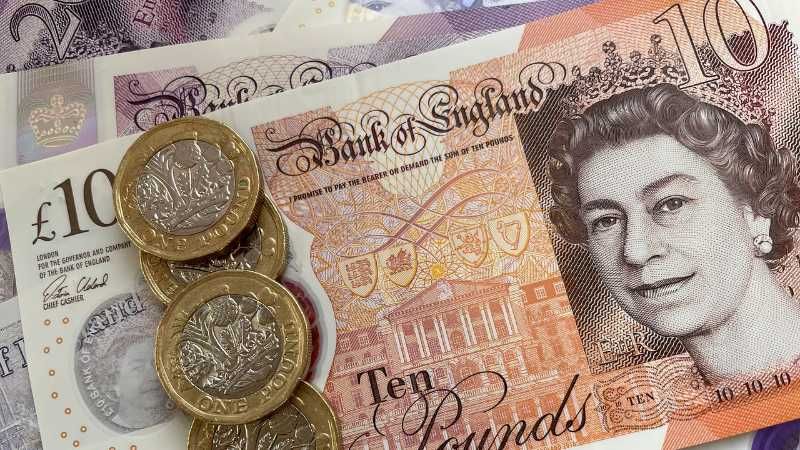
The British pound’s rally in the financial market may taper off soon if incoming inflation data do not align with estimates, say forex analysts.
Experts said the rising short-term U.K. bond yields strengthened the pound. The rise in short-term yields indicated expectations of further interest rate increases by the central bank. The Bank of England (BoE) has been raising its key rate since last year to tame soaring inflation.
According to analysts, consumer price data — a major indicator of inflation — due on Wednesday posed an “immediate” risk to the pound’s uptrend. A downside miss to the consumer price data forecast could prompt the BoE to reconsider further rate hikes, leading to a weaker pound.
U.K.’s consumer price index sat at 8.7 percent in April, from 10.1 percent the month before. Analysts had previously estimated that consumer price inflation would hit 8.2 percent in April. A recent survey showed that food price inflation had slowed last month from 15.7 percent to 15.4 percent.
Investec economist Philip Shaw predicted that the BoE would raise the key rate three more times, resulting in a target rate of 5.25 percent. According to Shaw, his institution had initially forecasted that the BoE’s rate would peak at 4.75 percent.
“Our baseline case is that rates will not rise as far as 6%, but policymakers are currently in a state of heightened data dependency and we note that significant risks exist in both directions,” said Shaw.
Societe Generale head of FX research Kit Juckes said the pound had been the “strongest” among G10 currencies over the past six months. According to the researcher, the recovery from political and market confidence crises last year fueled the sterling’s rally in forex trading.
“Sterling has been the strongest of the G10 currencies over the last 6 months, as it has continued to recover from last year’s political and confidence crises.”
Kit Juckes, Societe Generale head of FX Research
The pound/euro exchange rate hit 1.1765 on Monday, the highest in ten months. Analysts pointed out that the pound traded close to its critical level for “bulls.” Julius Baer analyst David Alexander Meier said the BoE’s rate hike campaigns supported the pound’s rally against the eurozone currency.
Similar to the BoE, the European Central Bank (ECB) has also increased the region’s benchmark rate to manage inflation. The ECB last hiked its rate by 25 basis points to 3.50 percent, the highest in 22 years.
Against the U.S. dollar, sterling traded at 1.2823 in the same trading session. The pound/dollar exchange rate breached 1.2848 on Friday, the highest in more than a year. Juckes said the expectation of further rate hikes by the BoE was “dragging” the pound’s value against the dollar to the 1.30 level.
In the U.S., the Federal Reserve also conducts policy tightening. It decided to maintain the federal fund rate steady at 5.00 to 5.25 percent last week. Analysts have projected that the U.S. dollar may continue to weaken as investors expect the Fed to make a policy pivot soon.
Economic outlook in U.K.
Jefferies global head of FX Brad Bechtel said the U.K. faced a “harder situation” than the eurozone and the U.S. due to higher inflation. According to Bechtel, the U.K. economy is “holding up well” despite inflation, but the situation may change soon. High inflation may prompt rising bond yields, increasing a probability of a “deep recession.”
The BoE’s rate hikes have also increased mortgage costs in Britain. There are reports of increasing defaults due to homeowners’ inability to afford mortgage payments. Analysts warn that rising mortgages may tip the U.K. into a recession sooner than anticipated.
In an uncertain economic environment, currencies like the pound rally because investors experience a declining risk appetite. But a recession may weaken the sterling, especially if major peer currencies remain supported.