

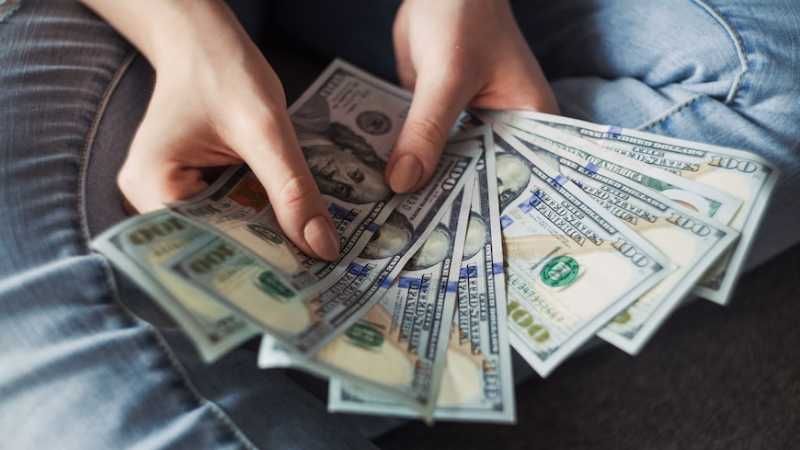
The greenback rallied on Thursday as investors reassessed their outlook for global monetary policy after the publication of key economic data.
The dollar index, DXY, jumped 0.64 percent to 102.0500. Earlier in the afternoon, the index briefly hit a more than one-week high of 102.06. The index declined in the previous sessions after the U.S. Federal Reserve signaled a possible rate hike pause.
Sterling declined by 0.92 percent to $1.2510 after breaching a one-week low of $1.2497 in the afternoon forex trading. The U.K. currency hit a one-year high of $1.2679 earlier this week as investors anticipated the Bank of England’s (BoE) rate policy decision. The BoE announced a 25-basis-point rate hike on Thursday, bringing the country’s cash rate to 4.5 percent.
Meanwhile, the euro slid 0.59 percent against the greenback to $1.0917 after falling to a one-month low of $1.0900 earlier in the session. The eurozone rallied since mid-April on expectations that the European Central Bank (ECB) would continue to hike its benchmark rate, narrowing the interest gap between the euro and the dollar. The ECB, however, indicated that it was considering a rate hike pause in its latest policy meeting.
Against the U.S. dollar, the Australian dollar plunged 1.18 percent to $0.6699, while the New Zealand dollar posted a 1.13 percent decline in the same session to $0.6297.
The dollar edged 0.10 percent higher over the Japanese yen to 134.5200 after declining for two consecutive sessions. Analysts earlier predicted that the dollar could breach the 130.000 level in the near future.
The U.S. Department of Labor reported that the number of people filing for unemployment benefits rose to a one-and-half-year high last week, indicating a slower demand in the job market. Analysts said the slowing labor market gave the Fed room to pause its monetary tightening cycle in June.
U.S. producer prices also showed a moderate increase of 2.3 percent in April, the smallest year-over-year price growth in more than two years. The producer price index previously posted a 2.7 percent advance in March. The reading offers further evidence of easing inflation pressures.
“I think the market is starting to rethink the outlook for the Fed cutting rates after inflation, while lower, remained on the high side,” Joseph Manimbo, senior market analyst at payment processing firm Convera, said. “The dollar stands to gain if markets pull rate cuts off the table, a scenario that would allow it to retain its yield advantage for longer.”
Manimbo also predicted that the BoE and ECB would decide on “more modest” interest rate hikes, respectively. The market analysts explained that the expectations of interest rate cuts by the Fed and the “less upside” trend for interest rates in other countries would “level the playing field” in the forex market.
Fed fund futures predict that banking officials will start cutting rates in September. The benchmark rate currently stands in the range of 5.00 to 5.25 percent.
Data from China affect dollar
Overnight data from China offered more evidence of weakness in the country’s economy post-pandemic, which helped boost the dollar’s performance on Thursday. Silver Gold Bull director of FX and precious metals risk management Erik Bregar said it prompted investors to “take off risk more broadly” and avoid riskier assets.
“The Chinese data overnight was a little surprising. And if you couple that with the reopening hype that’s been going on for a few months, let’s be honest, it just really hasn’t happened.”
Erik Bregar, Director of FX and Precious Metals Risk Management at Silver Gold Bull
China’s consumer prices rose by 0.1 percent year-over-year last month, the slowest pace in over two years. In March, consumer prices in China posted a yearly gain of 0.7 percent. Analysts explained that the reading reinforced signs that Chinese domestic demand remained tepid.
Meanwhile, producer deflation in China deepened in April, posting a 3.6 percent year-over-year decline against the earlier estimates of 3.2 percent. The producer price index previously posted a 2.5 percent drop in March.