

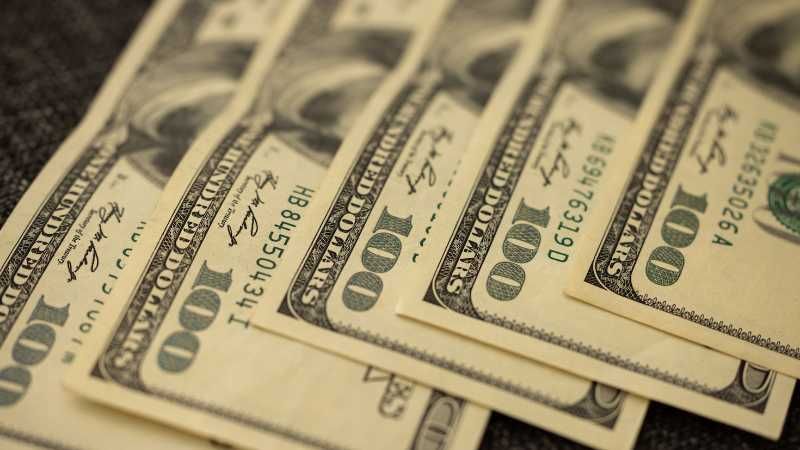
The U.S. dollar edged lower in Asia on Thursday local time after signs of slowing inflation increased expectations that the Federal Reserve would pause interest rate hikes soon.
The dollar index, which keeps up with the currency’s value against a basket of six peers, slid 0.05 percent to 101.36. The euro strengthened by 0.05 percent to $1.09885, while sterling traded 0.04 percent higher to $1.2631. Sterling hit a one-year high of $1.2679 in the previous trading session as investors anticipated the Bank of England’s rate policy decision.
The Australian dollar rose by 0.08 percent to $0.6784 after hitting its highest level in over two months on Wednesday. In the same session, the New Zealand dollar also added 0.09 percent to $0.63735.
The dollar plunged for the second consecutive day against the yen, posting a 0.26 percent loss to 134.025. Barclays senior FX strategist Shinichiro Kadota said the recent U.S. consumer price data weighed on the dollar-yen dynamic. Kadota also predicted that the dollar could hit the 130.000 level soon.
“Yesterday’s CPI was a bit of a relief, and we do expect that the Fed is now finished hiking.”
Shinichiro Kadota, Senior FX Strategist at Barclays
Based on the consumer price index (CPI), the U.S. headline inflation eased to 4.9 percent in April, against the earlier forecast of five percent. Core CPI, which excludes volatile gas and food prices, rose by 0.4 percent month-over-month and 5.5 percent from April last year, in line with the market’s expectation.
LPL Financial chief global strategist Quincy Krosby said the CPI showed that the Fed’s effort to tame inflation had worked, albeit at a slower pace than expected. The Fed started raising the country’s benchmark interest rate in March last year to bring down inflation to the annual target of two percent.
The U.S. central bank increased the interest rate by 25 basis points last week, pushing the benchmark rate to the range of 5.00 to 5.25 percent. Analysts said the CPI data boosted a case of a rate hike pause, especially since Fed officials already asserted that they would use economic data to determine the rate policy.
“The market is of the view that the Fed will be cutting rates sooner and faster than most other central banks,” Alvise Marino, macro trading strategist at New York’s Credit Suisse, said.
Fed fund futures now predict an 80 percent probability that the central bank will pause the rate hike in June. Investors also forecast at least two interest rate cuts before the end of the year.
Treasury yields fall
The yields of benchmark U.S. Treasury notes also fell alongside the dollar in the financial market. The two-year Treasury yield, which usually moves according to rate expectations, fell to 3.908 percent after the consumer price data. The yield of 10-year notes declined by 8.1 basis points to 3.441 percent.
Benchmark U.S. Treasury yields have a positive correlation with the dollar, with falling yields indicating a bearish dollar.
The yield spread between the two- and 10-year notes remained inverted at -0.47 percent as of May 10. Investors consider an inverted yield curve a sign of a recession because it indicates a slow-growth economic environment. Analysts currently predict that a recession may come in the third quarter of the year in the U.S.
The Fed’s consecutive rate hikes contribute significantly to the impending recession, as noted by several analysts. High borrowing costs, induced by high interest rates, reduce the rate of loan applications. The recent turmoil in the banking sector also leads to tighter loan requirements enforced by banks, making it tougher for companies and households to obtain funding.
Analysts also pointed out that the recent debt ceiling crisis could further push the U.S. into a recession. Experts have warned that failing to raise the national debt limit on time can make the country default on its payments as soon as next month. President Joe Biden is scheduled to meet with top Congress members to discuss the issue on Friday.