

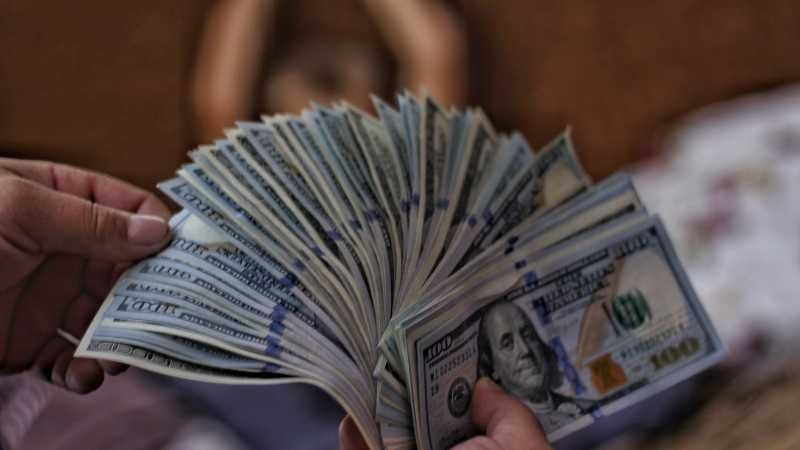
The greenback tumbled on Tuesday after new data revealed that U.S. job openings declined in March, suggesting softening labor market.
The DXY, an index that tracks the dollar’s performance against six peers, fell by 0.22 percent to 101.93 after hitting near a three-week high of 102.40 earlier in the session. The greenback previously posted a monthly loss of around one percent in April.
The euro gained 0.23 percent to trade at $1.1001 after previously falling to $1.0940, the lowest in almost two weeks. The euro’s momentary dip happened after data showed that banks in the E.U. were tightening their loan conditions, and a key indicator of inflation in the region had signaled cooling price growth.
Analysts explained that the new developments boosted the case for a smaller hike size by the European Central Bank (ECB) this Thursday. Many investors predicted the ECB would hike the benchmark rate by 50 points in the upcoming policy meeting. As a result, the euro has rallied since mid-March, fueled by expectations that the interest rate gap with the U.S. dollar will narrow.
“The expected forward US rate advantage versus the euro is the lowest in 10 years.”
Steve Englander, Head of Global G10 FX research and North America Macro Strategy at Standard Chartered Bank
Standard Chartered Bank head of global G10 FX research and North America macro strategy Steve Englander said the expected future U.S. rate advantage against the euro was at its lowest in ten years. He also said European stocks were experiencing “the most extended outperformance” against their U.S. counterparts in a decade.
The Australian dollar gained 0.51 percent to $0.6664 after breaching a two-week high of $0.6717. The Aussie strengthened versus the U.S. dollar after the Reserve Bank of Australia (RBA) hiked the cash rate by 25 basis points to 3.85 percent to bring down inflation to the target rate “within a reasonable timeframe.”
National Australia Bank head of F.X. strategy Ray Attrill said the RBA could push the cash rate to over four percent before pausing its monetary tightening campaign. Before the recent hike, the RBA decided not to raise the interest rate in April. Although data in April showed price growth remained high, Attrill said the RBA would watch other indicators to determine a rate hike in June.
The yen managed to reverse some earlier losses, with the dollar falling by 0.56 percent to trade at 136.67 yen. The Japanese currency previously declined for two-straight sessions after the country’s central bank announced its decision to keep the interest rate low even if peers continued to hike their rates.
The U.S. job openings fell by 384,000 to 9.5 million in March, hitting the lowest level in two years. The Department of Labor also reported that the ratio of vacancies to unemployment was 1.6 at the same time, the lowest reading in over a year. Analysts said the weakening labor market increased the probability that the Fed would pause the rate hike.
“The big question is does the Fed signal that policy is restrictive enough, or provide enough hints for the market to think that we’re not going to require the further tightening of policy,” Edward Moya, senior market analyst at forex trading firm OANDA, said.
Further tightening may push U.S. into recession
Analysts have cautioned the Fed that its hawkish monetary policy could push the U.S. economy into a recession. The economic growth in the U.S. declined significantly in the first quarter of the year, posting 1.1 percent, increasing fears that a recession will happen sooner than anticipated.
According to analysts, the Fed aims to engineer a soft landing for the economy — a state where growth declines but not contracts. Analysts said in addition to the Fed’s policy, tighter lending conditions and stubborn inflation in key areas of the market would also contribute to a recession.