

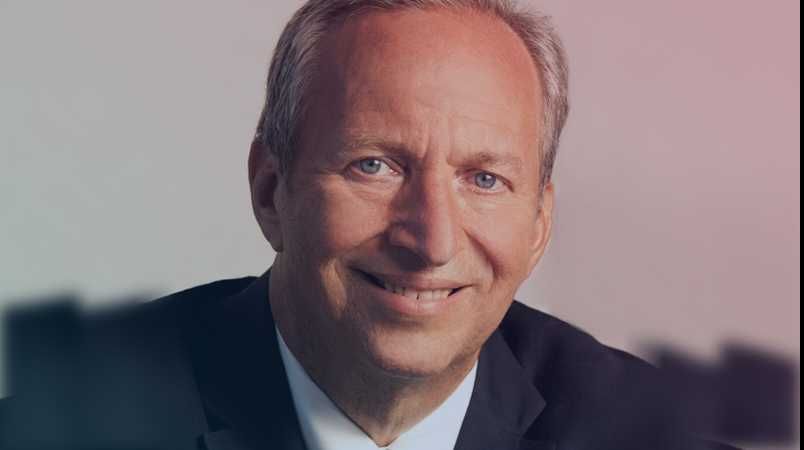
Former Treasury Secretary Larry Summers said that the yuan was not a threat to the U.S. dollar due to the Chinese market’s unpredictability and unreliability.
“There has never been a country where there was a strong desire to move as much capital out of the country as we’re seeing in China right now, albeit blocked by controls,” Summers said.
According to the former official, any nation that holds a large quantity of yuan will have difficulty maintaining its political stability. Economists have said Beijing’s capital controls limit the yuan’s liquidity, making it less valuable than other currencies like the U.S. dollar.
Nobel laureate Paul Krugman said the dollar still dominated the yuan because the U.S. had open financial markets and they were more protected by the country’s robust legal system. The dollar’s incumbency in financial markets also provides additional protection to the currency.
Summers, nevertheless, pointed out that there were still threats to the dollar’s value, especially the U.S. debt ceiling crisis. Policymakers are still debating the need to raise the national debt ceiling, with analysts saying the U.S. can default on its debt as soon as this summer if Congress does not act quickly.
Over the past few months, experts have raised concerns that the greenback may lose its global market dominance as other countries are diversifying their forex reserves. Several countries, including China and its allies, have formed agreements with one another to use their own domestic currencies in bilateral trade. ASEAN countries have also called for reduced reliance on the U.S. dollar.
Data from the International Monetary Fund (IMF) showed that the U.S. dollar remained the most dominant currency in the world, accounting for 58.36 percent of global forex reserves in Q4 2022. Within the same period, the Chinese yuan accounted for 2.7 percent of the global reserves.
Geopolitical concerns accelerate de-dollarization
Analysts said geopolitical uncertainties, like the Moscow invasion in Ukraine, had accelerated the de-dollarization in several countries. NatWest Markets emerging market strategist Galvin Chia said these political risks created “a lot of uncertainty and variability around how much of a safe haven that U.S. dollar really is.”
The West has frozen over $300 billion of Russia’s foreign currency reserves and imposed additional sanctions on Moscow and Russian oligarchs to weaken the country’s financial system. It forced Russia to use other currencies in trade, with the yuan recently replacing the dollar as the most traded currency in Russia.
According to ToscaFund Hong Kong chief investment officer Mark Tinker, the West’s move shows other nations that disagreeing with the U.S. foreign policy may result in having their assets confiscated or frozen, prompting these nations to look for other alternatives. Sources said that major oil producer Saudi Arabia had signaled that it was open to trade oil in currencies other than the dollar.
De-dollarization offers benefits
Analysts said the de-dollarization trend could benefit the global economy in various ways. Marcos Caramuru, former Brazil’s ambassador to China, said trading in domestic currencies would allow importers and exporters to balance risks and increase certainty in revenues and sales of their commodities.
Tinker explained that countries that no longer relied on the dollar as a middleman in bilateral trade would “move up the value chain.” These economies will be able to push the use of their local currencies in the global market. For emerging markets like several Asian countries, it will align with their growth trajectory. The IMF projects that Asia will contribute to over 70 percent of global growth in 2023.