

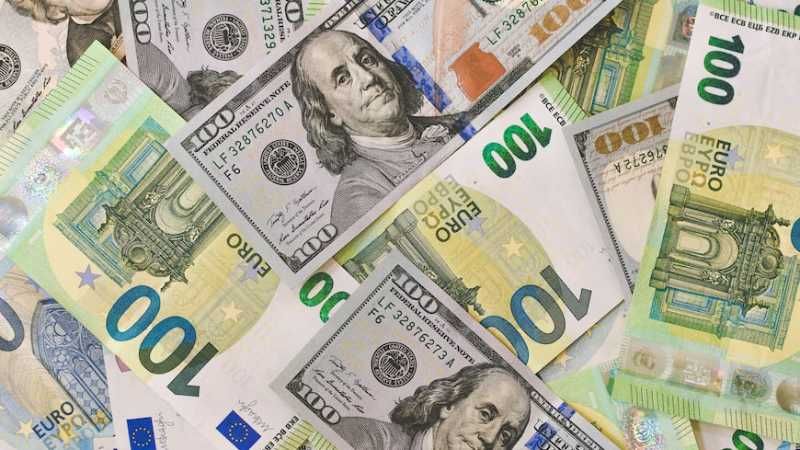
An increasing number of countries, including those in Southeast Asia and South America, are advocating for using other currencies to conduct trade rather than relying solely on the U.S. dollar.
The U.S. stays as the biggest economy in the world because oil and many other trade commodities are priced and exchanged in USD. The greenback has been the main currency used in global trade for a long time.
However, the Federal Reserve has increased interest rates aggressively to combat inflation within the country. As a result, many central banks across the globe have followed suit by growing their own interest rates to prevent capital outflows and significant depreciation of their currencies.
During the ASEAN finance ministers and central banks meeting held in Indonesia in March, officials discussed the possibility of reducing their dependence on the U.S. dollar, Japanese yen, and the euro. They explored the option of transitioning to using local currencies for settlements.
Recent reports from Indian media indicate that the Ministry of External Affairs (MEA) announced in early April that India and Malaysia have begun settling their trade using the Indian rupee.
Geopolitical risks, shifting away from greenback
According to analysts, the de-dollarization trend is fueled by evolving global economic dynamics. This shift towards using alternative currencies can bring several advantages to local economies.
As former Brazilian ambassador to China, Marcos Caramuru, told CNBC recently that settling trades in local currencies can enable exporters and importers to balance risks, have more options to invest and have more certainty about the revenues and sales.
Mark Tinker from ToscaFund Hong Kong told CNBC’s “Street Signs Asia” in early April that countries have been shifting away from using the U.S. dollar as “the middle man.” In bilateral trade, nations using their own currencies can experience the added advantage of advancing their position in the value chain.
“It isn’t about selling cheap stuff to Walmart, keeping down the prices for American consumers in order to earn dollars to buy its energy. This is now about actually a completely bilateral trade bloc,” Tinker said.
Geopolitical concerns have also accelerated the trend to move away from the U.S. dollar. Galvin Chia from NatWest Markets said that “political risk is really helping introduce a lot of uncertainty and variability around how much of a safe haven that U.S. dollar really is.”
As non-U.S. economic blocs continue to grow, these economies are increasingly promoting the use of their currencies. The IMF predicts that Asia could contribute over 70 percent of global growth this year.
China’s dominance in global trade and position as the second-largest economy make it one of the most influential nations in the world in advocating for alternative currencies.
According to IMF data analyzed by CNBC, China had the highest trade volume with 61 countries, considering both imports and exports, in 2022. On the other hand, the U.S. had this position with only 30 countries.
Other countries also advocate for a move away from the U.S. dollar, not just China. In early April, Brazil’s President Luiz Inácio Lula da Silva reportedly urged a reduction in dependence on the dollar for global trade during his state visit to Beijing.
Similarly, Malaysia’s Prime Minister Anwar Ibrahim suggested creating an “Asian Monetary Fund” to reduce dependence on the greenback in his recent visit to China. This proposal came as he acknowledged the country’s concerns about Asia’s reliance on the dollar in an interview with CNBC on April 6.
Future of U.S. dollar as international reserve currency
Although the U.S. dollar’s hegemony is gradually weakening, analysts predict it won’t be displaced soon as there are currently no viable alternatives.
Chia further explained that an alternative currency or economy would need to demonstrate international reach, convertibility, free-floating and the ability to take on the responsibility of a reserve currency.
Chia said the greenback will still dominate the international reserve system. He underlined that as long as most countries use the dollar as their reserve currency and no other economy steps up to take on the responsibility, it is unlikely that the dollar will be displaced in the next three to five years.